If you’ve ever stood next to a large industrial press, a generator humming through a factory floor, or even a heavy HVAC unit on the roof of an office building, you’ve felt that low, rumbling vibration that seeps into walls and floors. For decades, rubber mounts and foam pads were the go-to solution for quieting that movement—but as a metal spring supplier, I get asked at least once a week: can metal springs actually be used for vibration isolation? The short answer is yes, and they’re often better than you think, even for applications most people assume only need rubber. Metal Spring
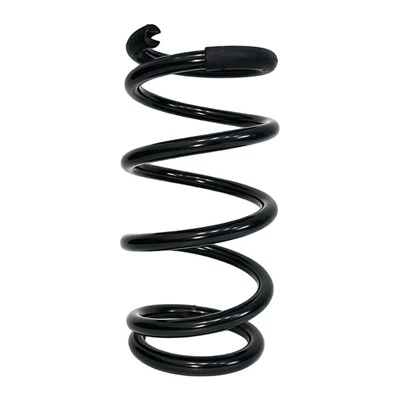
Let me start with the basics because a lot of folks don’t realize vibration isolation isn’t just about “stopping movement”—it’s about tuning movement to avoid specific frequencies that cause real damage. Every object has a natural frequency: the speed it vibrates back and forth when hit or disturbed. If you subject an object to a vibration that matches its natural frequency, you get resonance: that’s when movement gets amplified, not reduced, which can crack concrete, break mechanical parts, or drive noise levels so high they violate OSHA standards.
Metal springs work for isolation because they’re mechanical resonant systems. When you pair a spring with the mass of the machine it’s supporting, you create a system with its own resonant frequency, often called the “natural frequency of the isolation system.” The key rule here is that if you operate your machine at a speed (or frequency) that’s at least 2.5 times higher than this natural frequency, the spring will isolate that vibration effectively. That’s a hard number, but it’s not just guesswork—this comes from fundamental vibration physics, and it’s why industrial machinery often relies on metal springs instead of softer materials.
A common misconception is that metal springs are stiffer than rubber, so they must transmit more vibration. That’s only true if you use the wrong spring or if the machine’s operating frequency is too close to the spring’s natural frequency. Let’s say you have a 1000-pound generator that runs at 1800 RPM (that’s 30 times per second, for context). If you size a spring system correctly, you’ll give it a natural frequency of around 5 Hz (5 times per second). Since 5 is less than a third of 30, that’s firmly in the range where isolation works. The spring will flex slightly to absorb the generator’s movement, rather than letting that rumble pass straight to the floor.
Where metal springs really shine is in heavy-duty applications. Rubber degrades over time from oil, heat, and UV exposure, which makes it less effective at isolating vibration after just a few years. Metal springs, on the other hand, are made from materials like high-carbon steel, stainless steel, or even silicon-chromium alloy that can last 20+ years in harsh environments. I’ve worked with mining companies that use our springs for conveyor systems—those sites have dust, extreme temperatures, and constant exposure to hydraulic fluid, and rubber mounts would wear out in 18 months. Our coil springs? They’re still running strong after a decade.
Another benefit is load capacity. A single rubber mount might handle a few hundred pounds, but for large equipment like turbines or gas compressors that weigh 10,000 pounds or more, you need a system that can support heavy loads without sagging. Metal springs are engineered to handle high static loads, and you can combine multiple springs to distribute weight evenly, which is critical for preventing uneven vibration that can damage equipment over time.
Wait, but what about noise? Some people worry metal springs will make more noise than rubber. That’s a valid concern, but it’s easily solved with simple modifications. Most industrial metal spring isolators are paired with a damping element—usually a small rubber or polymer insert inside the spring coil, or a layer of damping material under the spring seat. This damping absorbs any high-frequency vibration that might come through the spring, while still keeping the spring’s strength for low-frequency isolation. I recently had a client in the power generation sector who was switching from rubber to metal springs for their new turbine skid; they were worried about noise levels exceeding their limit of 85 dB. We paired each spring with a custom damping insert, and testing showed the noise dropped by 12 dB, which is a huge difference in real-world terms.
Of course, metal springs aren’t the right solution for every job. For light, sensitive equipment like laboratory centrifuges or medical diagnostic machines that operate at very high frequencies, a softer material might be better. You also have to get the sizing right—too stiff a spring and you won’t get enough isolation, too soft and the machine might move too much, especially during start-up or shut-down when the frequency crosses the natural resonance point. That’s where working with a supplier like mine helps; we don’t just sell springs off the shelf. We work with engineers to calculate the exact natural frequency needed for their specific application, account for the weight of the equipment, and adjust the spring design—whether that’s changing the coil diameter, the number of coils, or the wire thickness—to get the right performance.
I’ve seen this play out in small-scale projects too. A few years ago, a local bakery reached out to me because their mixing machines were shaking so hard at 2 AM (when they run production) that it was waking up neighbors. They had tried rubber mounts, but the constant vibration was causing the rubber to crack every six months. We installed a set of custom-sized light-duty metal spring isolators, and the difference was immediate. The noise from the mixers dropped so much that the neighbors stopped calling, and the mounts haven’t needed replacement since. That’s the kind of result that makes me proud of what we do.
Another advantage of metal springs is their resistance to extreme temperatures. Rubber can break down if it’s exposed to temperatures below -20°F or above 180°F. For applications like industrial furnaces, kiln exhaust systems, or outdoor equipment in Arctic or desert climates, metal springs are the only viable option. I’ve supplied springs to a steel mill where the furnace hoods operate at 500°F, and rubber mounts would melt or crack within months. Our stainless steel springs hold up perfectly, even with the constant heat and vibration from the hoods moving as the furnace cycles.
Let’s talk about durability for a minute. Vibration isolation systems take a beating—they compress and expand thousands of times a minute, every hour of every day. Metal springs have a fatigue life that’s far longer than rubber; when engineered correctly, they can handle millions of compression cycles without losing their shape or load capacity. Rubber, by contrast, tends to harden or soften over time from repeated stress, which reduces its effectiveness at isolating vibration. That means less downtime for your equipment, fewer replacement costs, and a lower total cost of ownership over time.
I know there’s still a lot of misinformation out there about metal springs and vibration isolation. Some old textbooks still claim rubber is superior for most applications, but that’s outdated—modern spring design and damping technology have closed that gap, and in many cases, metal springs are the better choice. The key is matching the spring to the application, not just picking one because it’s what you’ve always used.
If you’re dealing with vibration issues on heavy equipment, outdoor machinery, or equipment operating in harsh conditions, it’s worth considering metal springs as an alternative. We work with clients across every industry—mining, power generation, food and beverage, HVAC, and more—to design custom vibration isolation spring systems that fit their exact needs. We don’t just send you a box of springs and say good luck; we provide engineering support, testing data, and follow-up to make sure the system works as intended.
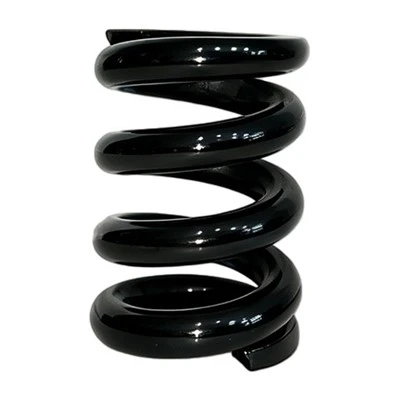
At the end of the day, vibration isolation is about protecting your equipment, reducing noise, and avoiding costly downtime. Metal springs have been proven to do that better than many other solutions for heavy-duty, long-lasting applications. If you’re tired of replacing rubber mounts every couple of years, or if you’re dealing with vibration that’s damaging your equipment, it’s time to talk to someone who knows metal springs and vibration isolation inside and out. Reach out to our team to discuss your project, and let’s find a solution that works for you.
Spring Steel Wire References:
- Inman, D.J. Engineering Vibration. 4th ed. Pearson, 2014.
- Harris, C.M. Harris’ Shock and Vibration Handbook. 6th ed. McGraw-Hill, 2010.
- Society of Automotive Engineers (SAE). Vibration Isolation for On-Highway Vehicles. SAE International, 2018.
- Metal Spring Manufacturers Institute (MSMI). Engineering Standards for Industrial Spring Applications. MSMI, 2021.
Baoding Zhongxin Spring Manufacturing Co., Ltd.
We’re known as one of the most reliable metal spring manufacturers and suppliers in China. With abundant experience, we warmly welcome you to buy durable metal spring made in China here and get pricelist from our factory. All customized springs are with high quality and competitive price.
Address: West Side, 200 Meters North of Chenzhuang Gas Station, Pangkou Town, Gaoyang County, Baoding City, Hebei Province, P.R. China
E-mail: 13292951555@163.com
WebSite: https://www.zhongxinind.com/
