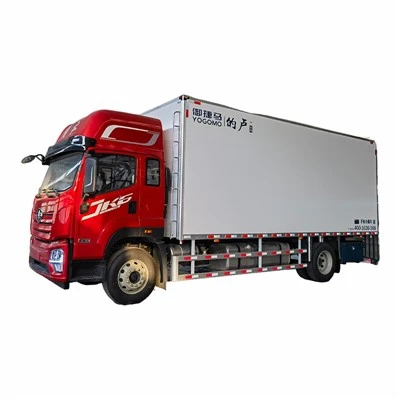
If you’re running or supplying reefer trucks, you know this isn’t just another delivery truck—every mile, every temperature fluctuation, every stop counts. The load isn’t just “stuff” in the back; it’s perishable goods: fresh produce, frozen meat, vaccines, dairy that can turn to waste if your rig’s tires aren’t up to snuff. I’ve been in the reefer truck supply game for over a decade, and I’ve seen way too many operators blow a delivery because they cut corners on tires. A cheap set that was fine for a regular box truck? Total garbage for a reefer, which carries extra weight, idles nonstop, and bounces more than standard rigs. Today I’m breaking down exactly how to pick tires that’ll keep your loads safe, your fleet on the road, and your profits intact. Reefer Truck

First off, let’s get real about what makes reefer tires different from any other truck tires. Regular freight trucks haul dry goods, maybe 20-30k lbs total. A reefer? Add in the refrigeration unit, insulation, the weight of your perishable cargo—we’re talking 34k to 40k lbs on average, sometimes more if you’re running double-deck. That extra weight puts way more stress on the tire, especially when you’re turning, braking, or hitting potholes on back roads. Then there’s the constant idle. Reefer units don’t shut off when you stop for gas or a nap, right? That means your tires are sitting in the same spot for hours, holding all that weight. Over time, that causes flat spotting—those ugly, uneven patches where the tire squishes down, leading to vibrations that can mess with your reefer’s temperature control (yes, really—vibrations in the trailer can jostle cold air and create hot spots for your cargo). Oh, and we can’t forget weather. If you’re running up and down the I-5 from California to Washington, you might hit 100°F in the Central Valley one day and light snow in the Siskiyous the next. Your tires need to handle both extremes, not just summer or winter.
So step one: nail the load rating before you even look at the brand. I see so many new operators skip this, thinking “bigger is better” or grabbing whatever’s cheapest at the truck stop. No. Every tire has a load index—look for tires marked for “maximum load at inflation pressure,” and make sure it’s rated for AT LEAST your reefer’s total gross vehicle weight (GVW). And don’t forget to account for wear over time. Tires lose a little capacity as they break in, so bump that number up by 5% just to be safe. For example, if your reefer’s max GVW is 36k lbs, don’t grab a tire rated for 36k—go for 37.8k, at least. I learned this the hard way early on: I supplied a set of tires to a small produce hauler who swears his reefer was only 35k lbs, and halfway through a cross-country trip, he blew two tires in the Rockies. Turned out his load of watermelons and pallets of strawberries added an extra 3k lbs, and the load rating was too low. He lost $12k in cargo, and I lost a customer. Lesson learned: never underestimate.
Next up, tire type: steer, drive, trailer—they’re not interchangeable, so don’t treat them like they are. The steer axle is where you do all your turning, so those tires need great traction and responsive handling, especially when you’re carrying that heavy reefer. Steer tires for reefers are usually all-position or highway tread, with a stiff sidewall to prevent wobbling. Wobble = bad for temperature control, remember. Drive axles? They need grip for acceleration, especially on hills or slippery roads. Reefers often have drive tires with deeper treads (16/32 of an inch minimum, by the way) and special rubber compounds that hold up to the constant torque from a heavy load. Trailer axles are the most straightforward, but still super important—they carry most of the reefer’s and cargo’s weight, so you want durable, puncture-resistant rubber that works well for long hauls. I always tell my customers: don’t buy a cheap drive tire to save a buck. The drive axle is where most blowouts happen, and a $150 tire savings can turn into a $10k cargo loss if you’re stuck on the side of the road in the middle of nowhere.
Then there’s the rubber compound. This is where a lot of guys zone out, but it’s make-or-break for reefers. Standard truck tire rubber is built for durability on dry roads, but reefer tires need rubber that works in both extreme heat and extreme cold. If you’re running in hot climates, soft rubber wears fast—you get tread damage and blowouts. If you’re running in cold climates, hard rubber is slippery, bad traction and more risk of skidding. Look for tires marked “all-season” or “performance” with a dual-temperature rating. Some brands even make “reefer-specific” rubber compounds these days, designed specifically to handle the constant flex from heavy loads and temperature swings. I had a customer last year who was running reefers in Minnesota, where winter temps drop to -20°F, and he was getting 20k miles on his old standard tires. Switched to the reefer-specific all-seasons, and he’s now getting 50k miles, no more skidding on icy back roads. That’s not a small win—less downtime, less tire replacements, more money in his pocket.
Inflation pressure is the part that most people mess up, even if they get the right tires. You can have the highest-rated, best compound reefer tire, but if it’s underinflated or overinflated, it’s useless. Underinflated tires flex way too much, leading to overheating (and we all know heat is the enemy of perishables), more wear, and flat spotting. Overinflated is just as bad: it makes the tire ride harsh, so you get more vibrations that mess with your reefer’s air flow, and it’s more prone to blowouts on rough roads. The good news? Most reefer tires have a recommended inflation pressure on the sidewall, or in your truck’s manual. But here’s a pro tip: adjust pressure based on load and temperature. If you’re hauling a full load of frozen beef to Texas in July, bump the pressure up a little (not over the max, though). If you’re returning empty, drop it a little to keep the ride smooth and avoid flat spotting. I remind every customer I work with to check their inflation pressure every morning before a run, especially if they’re heading across a state line where temps change. A lot of fleets use automatic tire pressure monitoring systems (TPMS) now, and I highly recommend them—they’ll alert you if pressure drops before you even notice, saving you from a blowout mid-route.
Tread depth is another non-negotiable. The legal minimum for commercial truck tires is 4/32 of an inch for drive and steer axles, 2/32 for trailers, but I say go higher—6/32 minimum for all reefer axles. Why? Deeper tread means better traction in wet, snow, or even gravel roads, and it wears longer. Plus, if you’re stuck waiting at a border crossing or a truck stop, you don’t want to be pulled over for bad tread and delayed a delivery that could cost you thousands. I’ve seen hailers get delayed for 12+ hours at the US-Canada border because their trailer tires had 2/32 of tread, and that delay made their load of fresh lettuce go bad. Avoid that at all costs. And while we’re on tread, pay attention to how it wears. If you notice uneven wear (cupping, shoulder wear), that means something’s off—maybe your alignment is bad, or your inflation pressure is wrong. Fix that fast, because uneven wear shortens tire life and can lead to sudden blowouts.
Now, what about brand vs. cheap no-name tires? I know, I know—everyone loves saving a buck, but with reefer tires, you get what you pay for. I’ve tested cheap no-name tires that fall apart at 25k miles, vs. reputable brands like Bridgestone, Goodyear, Michelin, and some of the newer specialty reefer brands that hit 60k+ miles. Let’s do the math: a set of four no-name steer tires is $400, vs. $600 for a good brand. If the no-names last 25k miles, that’s $16 per 1k miles. The good brand is $600, lasts 60k miles, that’s $10 per 1k miles. Plus, the good brand usually has better warranties and roadside assistance. When you’re running a reefer, downtime is a killer. If you get a blowout in the middle of nowhere, a reputable brand will send a tow truck or have a dealer nearby, while a no-name might leave you stranded for hours, or not honor the warranty if the tire dies early. I never recommend cheap tires for reefers—you’re gambling with your cargo, your reputation, and your bottom line.
Wait, one more thing: retread tires. A lot of operators swear by retreads for trailers, and I get it—they’re cheaper. But for steer and drive axles, especially on reefers, retreads are a risk. Retreads don’t have the same core strength as new tires, so they’re more prone to blowouts when carrying heavy loads, especially at high speeds. If you’re running trailers, some retread brands make decent ones for highway use, but make sure they’re certified for commercial truck use, and check their load rating. I only allow retreads on trailer axles for my customers, and even then, I make sure they’re from a trusted source. Steer and drive? Always new, always reefer-specific.
Let me wrap this up with a quick checklist you can print out and stick in your truck: 1. Verify load rating meets at least 105% of your reefer’s max GVW. 2. Match tire type to axle: steer = all-highway, drive = deep-tread traction, trailer = puncture-resistant. 3. Pick dual-temperature rubber compound rated for extreme hot/cold. 4. Check inflation pressure daily, adjust for load/temp, use TPMS if possible. 5. Keep tread depth at 6/32 minimum, replace if it drops below legal limit. 6. Skip cheap no-name tires—invest in reputable brands with reefer-specific lines. 7. Avoid retreads on steer/drive axles, only use certified retreads for trailers.
At the end of the day, choosing the right tires for your reefer truck isn’t just about saving money upfront—it’s about protecting your cargo, staying on schedule, and keeping your business running. If you’re a fleet manager looking to upgrade your tires, or a new reefer hauler just getting off the ground, I’m here to help. We’ve got direct access to premium reefer-specific tires, expert advice tailored to your routes and load types, and flexible pricing for fleets of all sizes. No sales fluff, no hidden fees—just solid info and products that won’t let you down on the road. Hit us up to chat through your specific needs, and we can help you find the perfect set of tires to keep your reefer moving and your cargo fresh.
Pickup Truck Refrigerated Box References:
Commercial Vehicle Safety Alliance. (2022). Tire Safety Guidelines for Commercial Trucks.
National Highway Traffic Safety Administration. (2021). Tire Load and Inflation Pressure Requirements for Heavy-Duty Vehicles.
Transportation Safety Board of Canada. (2020). Incident Report: Tire Failure and Cargo Spoilage in Reefer Trucks.
Tire Industry Association. (2023). Specialty Tire Specifications for Refrigerated Trailers.
Hebei Three Sworn Brothers Special Purpose Vehicle Co., Ltd.
We are one of the most professional reefer truck manufacturers and suppliers in China, featured by quality products and good price. Please rest assured to wholesale durable reefer truck for sale here from our factory. Welcome to view our website for more information.
Address: No.19,Taihang South Road, Economic Development Zone,Qinghe County, Hebei Province
E-mail: miaj@cnreeferbox.com
WebSite: https://www.cnreeferboxes.com/
