If you’ve ever stood next to a working pressure vessel in a refinery, chemical plant, or power generation facility, you know they are the unsung heroes of industrial operations. These heavy, precision-built containers hold gases, liquids, and even volatile substances at pressures that would turn a less robust piece of equipment into a safety hazard. But one of the most insidious threats we face as a pressure vessel supplier is something that operates quietly, almost invisibly, over time: creep. Pressure Vessel
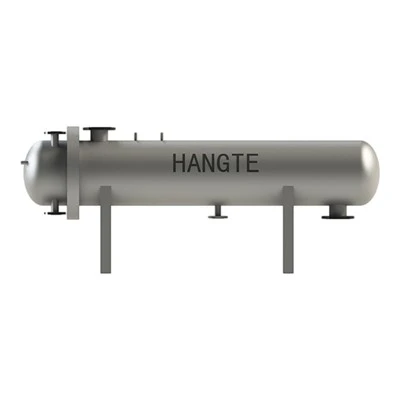
Creep is not a sudden failure. It’s a gradual deformation of material under constant stress and high temperature—conditions that are all too common in the industries that rely on our vessels. Most people new to pressure equipment think failure comes from a single accident, a overpressure event, or a obvious defect. But creep is a slow, relentless process that can stretch a vessel wall, warp its joints, or thin its structure until it can no longer hold pressure—often with little warning. After 15 years working with operators across North America, I’ve seen too many preventable failures trace back to unaddressed creep. That’s why today I want to walk through what creep actually is, how it impacts pressure vessels, and the practical steps we take as a supplier to help you prevent it, before it turns into a costly, dangerous problem.
Let’s start with the basics of creep, because understanding it is the first line of defense. Creep only happens when two conditions are met: sustained stress (meaning pressure that doesn’t fluctuate enough to let the material relax) and temperatures that are at least 30 to 40 percent of a metal’s melting point, measured in Kelvin. For carbon steel, that threshold is around 750°F (400°C); for high-alloy steels used in hotter applications, it can climb to 1000°F (540°C) or higher. When a metal is under these conditions, its atomic structure begins to shift slowly. At first, the deformation is barely noticeable—just a few thousandths of an inch over months. But over years, that small stretch adds up. A vessel designed to be 0.75 inches thick might thin to 0.6 inches, or a nozzle might shift its alignment just enough to create a stress concentration that leads to cracking.
What makes creep so tricky is that it doesn’t have a universal timeline. A vessel operating at 800°F might see creep rates of 0.01 percent per year, while another at 950°F could have a rate 10 times that. This variability means that even vessels of the same model, used in the same plant, can have wildly different creep behavior depending on their load, operating cycles, and maintenance. I remember a client in Texas who had two identical hydrogen reformer vessels installed side by side. One ran steady at its rated pressure and temperature, and after 10 years, its wall thickness had decreased by 0.08 inches—well within the acceptable limits set by the ASME Boiler and Pressure Vessel Code. The other vessel, however, was part of a unit that cycled on and off every week, and its creep rate was three times higher. By year 8, it was already approaching the minimum thickness allowed, and we had to replace it before it failed. That’s the thing about creep: it doesn’t care if your equipment is new or well-made. It only cares about the conditions it’s working in.
As a pressure vessel supplier, our job doesn’t end when we deliver a finished unit to the jobsite. We work with every client to build creep prevention into every stage of a vessel’s lifecycle, from material selection to post-installation maintenance. Let’s break down the key steps that actually work, not just the theory you’ll find in a textbook.
First, start with material selection, and don’t just default to the cheapest option. It’s tempting to choose standard carbon steel for every application to save upfront cost, but that can be a huge mistake for vessels operating above that 750°F threshold. Carbon steel has relatively low creep resistance at high temperatures, meaning it will deform faster than alloys designed for this exact condition. For example, if you’re building a steam drum for a power plant that runs at 900°F, a 2.25 chrome-1 molybdenum alloy will have a creep strength two to three times higher than carbon steel, even though it only adds 10 to 15 percent to the total cost of the vessel. We always ask clients for their exact operating temperature, pressure, and cycle history before quoting a vessel, and we’ll recommend the alloy that balances cost and creep resistance specifically for their application. We recently worked with a refinery that tried to cut costs by using carbon steel for a fluid catalytic cracking unit vessel that ran at 850°F. Within five years, the creep rate was 0.05 percent per year, and they were looking at an early replacement. We helped them upgrade to a high-chromium alloy, and in the three years since installation, their creep rate dropped to 0.01 percent per year—way below their critical threshold. It’s a small upfront cost that pays for itself in avoided downtime and repairs.
Next, design for stress, because excess stress is the biggest driver of creep. Creep doesn’t act on the entire vessel evenly; it concentrates at points where stress is highest: nozzle connections, weld joints, and areas where the vessel wall changes thickness. Too often, designers cut corners by making these connections smaller or simpler to reduce material use, but that creates hotspots where creep accelerates. For example, a nozzle welded directly to a curved vessel wall will have 20 to 30 percent more stress than a nozzle reinforced with a pad or a tapered transition, and that extra stress translates directly to faster creep. We incorporate finite element analysis (FEA) into every vessel design now, not just to check for pressure resistance, but to map stress distribution across the entire unit. We’ve had clients come to us with vessels they had built elsewhere that were failing due to high creep at nozzle joints, and we redesigned the connections to reduce stress by 40 percent, extending the vessel’s operational life by a decade or more. It’s also important to consider operating pressure cycles. Vessels that start and stop regularly experience thermal stress, which adds to the mechanical stress from pressure. We build flexibility into the design for cyclic operations, like thicker but not overly rigid wall sections, to let the material expand and contract without putting extra strain on the structure.
Once a vessel is built and installed, the next line of defense is monitoring—both during operation and through regular inspections. Creep is gradual, so catching it early is the only way to fix it before it leads to failure. We recommend two types of monitoring: real-time operational tracking and periodic non-destructive testing (NDT). For real-time tracking, we supply clients with integrated sensors that measure wall thickness, temperature, and pressure at the most stress-prone points of the vessel. These sensors feed data to a central system, so operators can see if the creep rate starts to climb above the safe threshold before it becomes a problem. For example, if a reactor vessel’s wall thickness drops 0.02 inches in a year, the sensor will flag that immediately, instead of waiting for a annual inspection that might miss the change. Periodic NDT is still critical, too. Ultrasonic testing (UT) is the most common method we use to measure wall thickness, but we also use phased array UT to check for creep damage in welds, and replica testing to examine the metal’s grain structure— the first place creep deformation shows up. Replica testing is especially useful because it can be done without shutting down the vessel, which means no costly downtime. We work with every client to set a custom inspection schedule based on their operating conditions: a high-cycle vessel at 900°F might get tested every two years, while a low-temperature, steady-operating vessel might only need testing every five years.
Another key step in preventing creep is proper operational management. Even the best-designed vessel will creep faster if it’s not run correctly. For example, many operators will overpressure a vessel during startup to speed up process cycles, but that extra pressure, combined with high startup temperatures, creates a surge of stress that accelerates creep. We train all our clients’ operators to follow startup and shutdown procedures that control pressure and temperature rates, so the material isn’t strained unnecessarily. We also advise keeping operating temperatures as consistent as possible. Fluctuations of even 50°F can increase creep rate by 20 to 30 percent, because metal expands and contracts unevenly, creating internal stress. If a plant has extra heat that can be reused elsewhere, or if insulation is damaged and leading to temperature swings, fixing those small issues will directly reduce creep. We recently worked with a chemical plant that had a cracked insulation on their distillation column vessel, leading to temperature swings of 100°F every day. By re-insulating the vessel and stabilizing its temperature, their creep rate dropped by 45 percent over 18 months. It’s a simple fix, but it makes a huge difference.
Finally, when a vessel has already been operating for 10 or more years, it’s important to consider life extension, not just replacement. Too many companies write off a vessel once it shows any signs of creep, but that’s not always necessary. We can run a full creep analysis, combining the inspection data, operational history, and material properties, to calculate the remaining useful life of the vessel. In some cases, adding a internal liner, upgrading insulation, or adjusting operating parameters can extend the vessel’s life by another 15 to 20 years. We helped a power generation plant that had a boiler steam drum that was approaching the end of its designed life, with measurable creep in the lower wall. Instead of replacing the entire drum for $2 million, we worked with their engineering team to line the interior with a high-temperature alloy, adjust operating pressures to reduce stress, and add improved insulation. The total cost was $500,000, and the drum is now operating safely with a remaining life of 12 years. That’s a solution that works for both the plant’s budget and safety.

At the end of the day, preventing creep isn’t about following a single rule or using the most expensive material. It’s about a holistic approach that starts with choosing the right equipment, designing for stress, monitoring closely, and managing operations properly. As a pressure vessel supplier, we don’t just build tanks—we build equipment that will operate safely for decades, and we stand behind that equipment with support every step of the way. If you have a vessel that’s operating at high temperatures, or if you’re planning a new project that will require pressure equipment, don’t wait until creep becomes a problem. Reach out to our team to discuss your requirements, and we’ll help you design a solution that meets your needs, stays within your budget, and minimizes the risk of creep-related failure.
Heat Exchanger References:
- ASME Boiler and Pressure Vessel Code, Section VIII, Division 1: Rules for Construction of Pressure Vessels, American Society of Mechanical Engineers, 2023.
- Dieter, G. E., Mechanical Metallurgy, 3rd Edition, McGraw-Hill, 1986, Chapters 12 and 13.
- creep and Creep-Fatigue Evaluation for Pressure Vessels and Piping, Electric Power Research Institute (EPRI), 2019.
- "Material Selection for High-Temperature Pressure Vessels," Pressure Vessel Technology Journal, Vol. 42, No. 2, 2021, pp. 45-58.
- Non-Destructive Testing for Creep Damage in Alloy Steels, American Society for Nondestructive Testing (ASNT), 2020.
Zhejiang Hangte Container Co., Ltd.
As one of the most professional pressure vessel manufacturers and suppliers in China, our products have good reputation in the market. We warmly welcome you to wholesale customized pressure vessel made in China here from our factory. Also, pricelist is available.
Address: No.9 Gaoxin Road, Cao’e Subdistrict, Shangyu District, Shaoxing City, Zhejiang Province
E-mail: hangtemy@rongqi.cn
WebSite: https://www.hangtecontainer.com/
