Let’s cut to the chase: If you’re running a laboratory, whether it’s a pharmaceutical QC lab, a food safety testing facility, or a university research lab, your testing equipment isn’t just a hunk of metal and circuit boards—it’s the backbone of every result you produce. Last quarter, I got a call from a small environmental testing outfit that had been using a 7-year-old gas chromatograph (GC) for pesticide screening. They thought it was fine because it “still turned on,” but when I arrived for a routine check, I found that its injection port liner was so caked with residue from years of unmaintained sample debris that their recent results had a 15% error rate on herbicide testing. They’d just spent 3 weeks re-running every sample from the past month, missing a critical regulatory deadline in the process. That’s the cost of skipping proper lab equipment maintenance—and as a supplier who’s been in this space for 12 years, I’ve seen that mistake a hundred times over. Lab Testing Equipment

Maintenance for lab testing equipment isn’t a one-size-fits-all chore. It’s tailored to every single instrument, its frequency of use, the type of samples it processes, and even the environmental conditions of your lab (think temperature swings, humidity, or dust from construction in the next room). Below, I’ll break down the non-negotiable maintenance steps we work through with every client, the common pitfalls we see, and how a proactive maintenance schedule doesn’t just fix problems—it saves you time, money, and regulatory headaches.
First, let’s split maintenance into two core categories: routine daily/weekly checks (the “don’t skip these small things”) and scheduled periodic maintenance (the “deep dives that keep your instruments reliable long-term”). Let’s start with daily and weekly tasks, because these are the ones that catch issues before they spiral. For every lab, the daily checklist should start with visual and functional inspections. For things like balances, pipettes, pH meters, and centrifuges—your workhorses—these are non-negotiable. I mentioned the GC earlier, but a balance that’s not level (a quick visual check of the bubble level on the base) will give inaccurate mass measurements that throw off every calculation from sample preparation to final results. Pipettes, the most commonly used small equipment, need a quick function test every day: draw up water and dispense it to confirm there’s no leaking or inconsistent volume. I’ve had clients tell me, “I use a calibrator for pipettes every six months, so daily checks are overkill”—but that’s exactly why they end up with cross-contamination between samples because a pipette tip isn’t seating properly, or a volume that’s off by 2% leading to failed sample dilutions.
For specialized equipment like HPLC systems or UV-Vis spectrophotometers, daily checks need to include detector performance and mobile phase maintenance. HPLCs rely on consistent flow rates to separate compounds; if your solvent lines have a small air bubble (which forms if you don’t purge lines at the end of the day), you’ll get erratic peaks in your chromatogram. We train all our clients to run a 5-minute “dead volume test” with pure methanol every morning: inject 10 microliters, and if the void peak is more than 2 minutes, you’ve got a line issue that needs fixing before you run samples. For UV-Vis, cleaning the sample cell after every use is mandatory—even if you use a disposable cuvette, the cell holder (the reusable part) can get smeared with residue that causes baseline drift. I once worked with a food testing lab that was failing FDA audits because their baseline absorbance for aflatoxin testing was off by 0.02 AU; it turned out the cuvette holder had dried chocolate residue on the inner walls, and a quick 2-minute wipe with ethanol fixed the problem immediately.
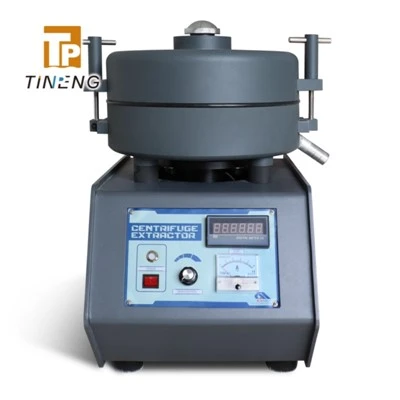
Now, moving to weekly and monthly tasks, which are the bridge between daily checks and the deeper quarterly/annual maintenance. This is where things like replacing consumable parts that wear out get handled, and where we usually catch issues that daily checks can’t. For example, centrifuges: every week, you should inspect the rotor for cracks or corrosion. Even a tiny hairline crack in a high-speed centrifuge rotor can catastrophically fail mid-run, sending sample tubes flying and damaging the instrument (and, more importantly, putting lab staff at risk). We had a client a few years back who skipped rotor inspections and a centrifuge rotor cracked; the rotor shrapnel put a hole in their lab’s fume hood and ruined $20,000 worth of test samples. That’s not a repair cost you can budget for as easily as a $50 rotor inspection. For pH meters, monthly calibration checks are key—wait, no, correction: you should calibrate them before every use for critical tests, but monthly you need to clean the electrode properly. A common mistake is storing pH meter electrodes in distilled water, which leaches ions from the glass membrane; the correct storage solution is 4M KCl, and if you skip that, your electrode’s lifespan drops from 12 months to 3 or 4. That’s an extra $300 per electrode every year, just from storage habits.
Then there’s scheduled periodic maintenance—quarterly, semi-annual, and annual tasks that most small labs put on the back burner, but that are non-negotiable for regulatory compliance and instrument longevity. For this, it’s important to work off your equipment’s user manual, but also with a supplier who knows how instruments hold up in real-world lab conditions. Let’s take GCs as an example: the user manual says to change the inlet liner every 50 runs, but if your lab runs 20 samples a day, that’s every 2.5 weeks—skipping that will lead to the kind of residue buildup I mentioned earlier, with error rates that make your results unreliable. Annual tasks for GCs include leak testing the gas lines (a small leak in the carrier gas line can lead to peak splitting or no peaks at all) and verifying the temperature of the oven, since even a 5-degree Celsius deviation will throw off compound separation. For HPLCs, semi-annual column maintenance—flushing the pump, replacing the guard column, and checking the system pressure—will extend the life of your analytical column, which can cost $1,000 or more. We tell our clients: a $50 guard column is a fraction of the cost of an analytical column, and skipping guard column replacement will lead to dirty samples ruining your main column in months.
Another big part of periodic maintenance is performance qualification (PQ) and calibration, which isn’t just a suggestion for regulated labs (think FDA, ISO 17025, or GLP) but for any lab that wants their results to be trusted. A lot of clients ask me: “Do I need to calibrate every year?” The answer depends on the equipment and its use. Balances for pharmaceutical testing need to be calibrated quarterly, per USP guidelines, while a pH meter for general water testing might only need annual calibration. But here’s the catch: calibration isn’t a one-and-done task. You need to document it, and schedule it around your sample runs so you don’t have to pause testing for a whole day when the calibration is due. We set up automated reminders for all our clients based on their instrument usage, so when their balance is due for calibration, we let them know 2 weeks in advance, and can even send a certified calibration technician to their lab so they don’t have to ship the instrument (which adds more risk of damage during transport).
Now, let’s talk about the hidden costs of skipping maintenance, because it’s easy to see maintenance as an expense instead of an investment. The small environmental testing lab I mentioned earlier: they spent 3 weeks re-running 1,200 samples, missed a regulatory deadline, and almost lost a $50,000 annual contract with the state EPA. The cost of the GC liner? $45. The cost of cleaning the injection port? 15 minutes of a technician’s time. Total cost for a fix that would have prevented weeks of work and a potential contract loss: less than $100. Another example: a university research lab that ran a mass spectrometer for proteomics, skipped annual maintenance, and had a vacuum pump fail mid-experiment. The pump replacement was $8,000, and the experiment they’d been running for 6 months was lost—total cost, over $20,000, all because they didn’t check a filter that cost $10 to replace every quarter.
Common misconceptions I hear all the time: “My lab is small, so maintenance isn’t a big deal.” No—small labs usually have a higher turnover of samples per technician, so their equipment works harder than large, well-staffed labs. Or “I can just fix it when it breaks.” The problem is that when lab testing equipment breaks, it’s not just the repair cost—your samples are time-sensitive. If you’re testing for foodborne pathogens for a local grocery chain, a broken incubator means you can’t release test results, which can cost your lab its client relationship overnight. If you’re running environmental tests for a construction project, a broken compactor or soil testing equipment can delay the whole project timeline.
At the end of the day, the best maintenance schedule is tailored to your specific lab, your instruments, and your needs. As a lab testing equipment supplier, we don’t just sell you a GC or a balance and walk away—we help you build a maintenance plan that fits your workflow, not the other way around. We send you customized checklists based on your instrument model, track when consumables are due for replacement, and offer flexible maintenance services from routine on-site checks to emergency repairs when something does go wrong.
If you’re tired of unexpected instrument failures, missed deadlines, or results that just don’t align with expectations, let’s connect. We can walk through your current equipment setup, identify gaps in your maintenance plan, and put together a solution that keeps your lab running smoothly, without the stress of last-minute repairs or regulatory penalties.
Setting Time Apparatus References:
- United States Pharmacopeia (USP). General Chapter <1225>: Validation of Compendial Procedures. Rockville, MD: USP; 2022.
- International Organization for Standardization (ISO). ISO/IEC 17025:2017 General Requirements for the Competence of Testing and Calibration Laboratories. Geneva, Switzerland: ISO; 2017.
- Thermo Fisher Scientific. Lab Equipment Maintenance Best Practices: A Guide for Laboratory Managers. Waltham, MA: Thermo Fisher Scientific; 2021.
- Environmental Protection Agency (EPA). Lab Equipment Maintenance Guidelines for Environmental Testing Laboratories. Washington, DC: EPA; 2020.
Zhuozhou Tianpeng Imp. and Exp. Trade Co., Ltd.
Zhuozhou Tianpeng Imp. and Exp. Trade Co., Ltd. is one of the most professional lab testing equipment manufacturers and suppliers in China, featured by quality products and good price. Please rest assured to buy advanced lab testing equipment made in China here from our factory. Customized orders are welcome.
Address: Building C28, Hegu Technology Industrial Park, Development Zone, Zhuozhou, Hebei, China
E-mail: zhangdajing@testmould.com
WebSite: https://www.testmould.net/
