Hey everyone, if you’ve ever shopped for fire alarm cables, you might’ve seen a bunch of specs thrown around—temperature ratings, fire resistance, stuff like that. But have you ever stopped to ask: what the hell is that insulation actually made of? I’m Jake, been selling fire alarm cables for 8 years now, and let me tell you, a lot of customers skip over this part… until something goes wrong. Last year, a client came to me panicking because their old system melted mid-test, and it turned out they bought cables with cheap insulation that couldn’t handle the heat. No joke. Today, I’m breaking down exactly what fire alarm cable insulation is made of, why it matters, and how to make sure you’re not getting ripped off. Fire Alarm Cable
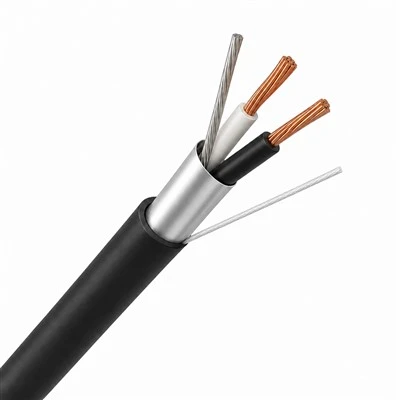
First off, let’s set the scene. Fire alarm cables aren’t like the regular Ethernet cords you run to your TV or the extension you use for your power tools. They’re supposed to work when everything else is on fire. The insulation isn’t just there to keep wires from touching each other—it’s the first line of defense against heat, smoke, and even small flames that could fry the whole system before you even call the fire department. That’s why the material isn’t random; it’s chosen for very specific fire-related properties.
Let’s start with the most common stuff you’ll see: PVC. Wait, not just regular PVC—we’re talking specifically flame-retardant PVC, or FR-PVC for short. Most of the budget-friendly cables out there use this, and honestly, for a lot of low-risk spaces like small offices or residential buildings, it gets the job done. But don’t let the “flame-retardant” label fool you. FR-PVC is made by adding chemicals like chlorinated compounds to regular PVC to slow down burning. It self-extinguishes if the flame source is removed, which is way better than the plastic in your old phone charger that keeps burning until there’s nothing left. That said, FR-PVC has a big flaw: when it heats up, it releases toxic fumes. Think hydrogen chloride, stuff that can make it hard to breathe if there’s a fire, which is not ideal for hallways or rooms where people evacuate. Also, it usually maxes out at around 140°F when it’s still flexible, and if it hits higher temps, it gets brittle. So if you’re putting cables in a utility closet that might get warm from a water heater or near a kitchen appliance, FR-PVC might not cut it long-term.
Next up, the upgrade: Cross-Linked Polyethylene, or XLPE. This is where things get serious. XLPE is a thermoset plastic, meaning when you make it, you add heat and chemicals to link the molecules together—like turning a loose ball of yarn into a rigid, tangle-proof mat. That cross-linking is why it’s so tough. It can handle way higher temps than PVC—we’re talking up to 250°F for continuous use, and short bursts of 350°F. It’s also way more flexible when it’s cold, so if you’re running cables outside in a place that drops below freezing, XLPE won’t crack or snap like cheaper PVC. And here’s the best part for fire safety: XLPE doesn’t release nearly as many toxic fumes when it burns. It doesn’t drip molten plastic either, which is a huge fire hazard because those drips can spread flames to other materials. That’s why you’ll see XLPE in commercial buildings, schools, and hospitals—places where people are, and where reliability matters more than saving a few bucks. I had a client a couple years back who owned a middle school; they needed to replace all their old fire alarm cables, and the maintenance team originally wanted the cheapest FR-PVC. We talked them through XLPE, and they ended up saving money in the long run because XLPE lasts twice as long as PVC. No need to re-do the wiring in 5 years.
Wait, there’s another material that’s even more heavy-duty: Mineral Insulated Metal Sheath, or MI cable. This isn’t just insulation—wait, technically the insulation here is magnesium oxide, a ceramic material. Oh, right, MI cables have a copper core, surrounded by compressed magnesium oxide powder, then a copper outer sheath. So the “insulation” here is the mineral powder. This is the stuff you use if a cable is gonna be exposed to direct flames for a long time. MI cables can handle temps up to 1,800°F for hours. Like, if a fire is raging in a wall, this insulation won’t break down. The only downside? It’s way more expensive than plastic-insulated cables, and it’s rigid—hard to bend around tight corners. So you don’t use it for every single run, just the critical parts, like cables going through walls to the fire alarm panel or to sprinkler systems. I sold a bunch of MI cable last year to a construction company building a new hospital wing; they needed every fire alarm cable near the stairwells to be MI because that’s where people evacuate, so the system has to work no matter what. No exceptions.
Now, let’s talk about what’s a scam. You might see some cables labeled “fire-resistant” that use a mix of materials, or they’ll say “UL-listed” but don’t specify the insulation. Wait, UL listings for fire alarm cables—there’s a specific standard, right? UL 1424, which is for fire protective signaling cables. A lot of cheap cables will meet the minimum for low-risk areas, but if you’re in a space with high heat or where people can’t evacuate fast (like a warehouse with a high ceiling), you need to look for the right insulation. Another red flag: if a cable says “low-smoke” but uses FR-PVC. Yeah, FR-PVC does have lower smoke than regular PVC, but it still has more smoke and more toxic fumes than XLPE. I always tell customers, don’t just chase the “low-price” tag. If your insulation fails, your fire alarm might not go off, or it might not work long enough to get everyone out. That’s not a place to cut corners.
Wait, also, let’s not forget about riser and plenum-rated cables. Oh right! Riser-rated is for cables running between floors, plenum-rated is for cables running through air ducts. Those ratings are tied to insulation material too. Riser-rated cables usually use XLPE or FR-PVC with a thicker jacket, so if a cable in a wall catches fire, it doesn’t spread up to the next floor. Plenum-rated uses even better insulation, like a fluoropolymer (PTFE, Teflon is a brand name you might know) that releases almost no smoke when it burns. Air ducts circulate air through the whole building, so if a cable in a plenum space burns, the smoke will go everywhere. So plenum-rated insulation has to be super low-smoke, which is why it’s more expensive. I’ve had clients come to me asking for plenum cables but trying to use riser-rated because it’s cheaper—big mistake. That’s a fire code violation, and if there’s a fire, it’ll fail the smoke test way faster.
Let me wrap this up with a quick tip. If you’re picking out fire alarm cables, first ask yourself: where is this going? Is it in a small apartment? FR-PVC might work for a few years, but if it’s in a school, hospital, or commercial building, go with XLPE. If it’s in a critical run that needs to survive direct fire, go with MI. Don’t just look at the price—ask the supplier what the insulation is made of, and make sure it’s UL 1424 rated, and matches the space’s needs.

If you’re in the market for fire alarm cables, or you’ve got questions about what’s right for your project, hit me up to chat. I’ve been doing this long enough to know exactly what works for different spaces, no sales pitch—just real advice. I’ve seen too many people end up with bad cables because they didn’t ask the right questions, and I don’t want that to happen to you.
Speaker Cable References
- Underwriters Laboratories (UL) Standard 1424: Standard for Fire Protective Signaling Cables
- National Electrical Code (NEC) Article 760: Fire Protective Signaling Systems
- Fire Alarm & Signaling Manufacturers Association (FASMA) Technical Bulletin 2021-03: Insulation Materials for Fire Alarm Cables
Jiaxing Doublewin Cable Co., Ltd
Jiaxing Doublewin Cable Co., Ltd. is one of the most professional fire alarm cable manufacturers and suppliers in China, also supports customized service. Welcome to buy bulk durable fire alarm cable made in China here and get quotation from our factory. For price consultation, contact us.
Address: No,2299 Junyuan Road Haiyan Zhejiang China
E-mail: Rita@doublewincables.com
WebSite: https://www.chinacablemfg.com/
