If you’ve ever stopped to watch a 4-wheel electric cargo pickup moving a pallet of construction supplies, a full load of grocery distribution goods, or even a chunk of farm equipment down a city street, you might’ve wondered what makes its power system tick. As a supplier of these electric workhorses, I get asked this question all the time—not just by curious enthusiasts, but by fleet managers, construction supervisors, and small business owners who rely on these trucks to keep their operations running smoothly. Unlike gas or diesel pickups, where power flows from an engine to a transmission to the wheels, an electric cargo pickup’s distribution system is a network of interconnected parts built for torque, efficiency, and the heavy-duty demands of cargo work. Let me break down how it all works, straight from the team that builds and services these trucks every day. 4-Wheel Electric Cargo Pickup
It starts with the heart of the whole system: the high-voltage battery pack. For our 4-wheel electric cargo pickups, we don’t use the small, consumer-grade batteries you’d find in a sedan. We spec cylindrical lithium-iron-phosphate (LFP) cells, grouped into modules and housed in a reinforced, weather-sealed steel frame that’s mounted low and central to the chassis. Why low and central? Because cargo pickups carry up to 3,500 pounds of payload on top of a 1,000-pound battery, so center of gravity is non-negotiable for stability when hauling heavy loads. The battery operates at 400 volts, a sweet spot for our model—high enough to cut down on energy loss during transfer, but not so high that it requires specialized, costly electrical components. Unlike some passenger electric vehicles that optimize for highway speed, our battery is tuned for constant, steady torque, which is what you need when pulling a fully loaded trailer up a 6% grade or hauling pallets of boxes around a warehouse yard.
Next, power leaves the battery through a system of heavy-gauge copper busbars—thicker than your arm, for context—that route to the main power inverter. This isn’t a small, flimsy part; it’s a water-cooled unit that sits between the battery and the motors, and its job is one of the most important in the whole distribution system. The battery outputs direct current (DC), but the motors that move the wheels run on alternating current (AC). The inverter converts that DC to AC, adjusting the frequency of the current to control how fast the motors spin and how much torque they deliver. For a cargo pickup, this adjustability is key: when you’re pulling a full load out of a stop, you need a high frequency to send lots of torque to the wheels, but when you’re cruising at 55 mph on a highway, you can dial back the frequency to save energy.
Now, here’s where things differ from a standard passenger EV: our 4-wheel setup uses two independent permanent-magnet synchronous motors, one mounted on the front axle and one on the rear axle. Wait—could we use a single motor and transfer power to both axles via a driveshaft and differential? Sure, we could. But for cargo work, that single-motor setup has a big flaw: if one axle loses traction, the whole truck loses power. On a construction site covered in mud, a grocery route on icy morning roads, or a farm field with loose gravel, that’s a non-starter. Two separate motors let us distribute power dynamically: if the rear axle starts to slip, the system automatically shifts more torque to the front axle, and vice versa. It’s called torque vectoring, and it’s not just for performance—it’s a critical safety feature for a work truck that’s often operating in less-than-ideal conditions.
Each axle has its own integrated gearbox and differential, but we don’t use the old-school mechanical differentials you’d find in a gas pickup. Instead, we use electronic locking differentials, controlled by the main powertrain control module (PCM). Let’s walk through how that works. When you’re driving straight on a paved road, the differentials split power evenly between the two wheels on each axle, so you don’t wear out tires prematurely. But if you hit a patch of ice and one wheel starts spinning, the PCM detects that wheel’s speed is way higher than the other, and it sends a signal to lock the differential on that axle, so both wheels turn at the same speed. That means power goes to the wheel that has traction, not the one spinning in empty space. For a cargo pickup hauling a full load, this makes all the difference between getting stuck on a job site and finishing your route on time.
Power distribution isn’t just about moving it to the axles, though—it’s also about managing how it comes back. That’s where regenerative braking comes in, a feature that’s way more useful for work trucks than most people realize. When you hit the brakes, instead of using friction pads to slow the wheels (which wastes energy as heat), the motors reverse function and become generators. They capture the kinetic energy from the moving truck and convert it back into DC, which is sent back to the battery to be stored. For a delivery driver who’s stopping and starting 50 times an hour, that can add up to 15-20% extra range, which means fewer stops to charge and more time on the job. The power system also has a separate 12-volt auxiliary circuit, tapped into the high-voltage system, that runs all the smaller components: the headlights, the infotainment, the power steering, the liftgate for the cargo bed. That’s a critical fail-safe—even if the high-voltage system has a minor issue, the 12-volt side keeps essential systems running.
One thing we prioritize with our power distribution system is thermal management, and it’s something that a lot of people outside the industry don’t think about. When you’re hauling a 3,000-pound load up a mountain grade, the inverter and motors generate a lot of heat. If they get too hot, their efficiency drops, and they can even sustain permanent damage. That’s why our system has a closed-loop liquid cooling system, separate from the engine cooling you’d find in a gas truck. It circulates a mix of water and ethylene glycol through the inverter, motors, and even the battery pack, maintaining a constant operating temperature between 60 and 80 degrees Fahrenheit. In extreme cold, the system can also pre-heat the battery and motors before you start driving, ensuring you get full power and range even on a 20-degree winter morning. We learned this the hard way a few years ago, when we shipped a batch of pickups to a fleet in Minnesota and they reported reduced range in January. We adjusted the thermal management algorithm, and now those fleets see the same performance year-round as they do in the summer.
Another key part of the power distribution system is the battery management system (BMS), often called the “brain” of the battery. It’s a tiny, powerful computer that monitors every single cell in the pack—its voltage, temperature, and charge level—20 times per second. If one cell is getting too much charge, or too hot, the BMS adjusts how much power goes to that cell, preventing overcharging or thermal runaway. For our cargo pickups, we also program the BMS to balance power between the modules when the battery is at 20% charge, so you don’t end up with a dead module when others are still good. That extends the overall battery life, which is a big deal for fleet operators who want their trucks to last 10 years or more.
Let’s put all this together with an example. Say a delivery driver is picking up a full load of 1,200 pounds of packages from a warehouse. They get into the truck, turn the key, and the 12-volt auxiliary system powers up, firing up the BMS, inverter, and motors. The BMS checks the battery—its full charge is 85 kWh, so it shows 82 kWh available, perfect for their 150-mile route. They pull out of the parking lot, hit a gentle incline, and the PCM tells both inverters to send maximum torque to both axles. The two motors spin at a steady 1,500 RPM, pulling the load smoothly without straining. Halfway through the route, they hit a rain-slicked back road, and the rear axle loses traction. The PCM detects the rear wheels spinning 10 MPH faster than the front, locks the rear differential, and shifts 20% more torque to the front axle, keeping the truck moving forward without sliding. They stop at a red light, and instead of pumping the brake, they let off the accelerator— the motors switch to generators, recapturing 0.5 kWh of energy that gets sent back to the battery, adding a mile of range. By the end of the route, they’ve used 78 kWh, so the battery is at 4 kWh left, and the whole system is running at a steady 72 degrees, no overheating, no issues.
This is the difference between our electric cargo pickups and the competitors’ models we see on the market. A lot of EV suppliers build their pickups around consumer passenger car technology, scaling it up, but work trucks have different needs. Our power distribution system is built specifically for heavy loads, long workdays, and the rough conditions that come with commercial use. We don’t cut corners on the copper busbars, we don’t skimp on the liquid cooling, and we don’t skip the dynamic torque vectoring that keeps our trucks moving when others get stuck.
If you’re a fleet manager looking to replace your gas-powered cargo pickups, or a small business owner who needs a reliable work truck that won’t break the bank on fuel and maintenance, our 4-wheel electric cargo pickups are built for your operations. The power distribution system we designed isn’t just a collection of parts—it’s tailored to what you need to get done, every single day. Whether you’re hauling construction materials across a job site, making daily deliveries around the city, or running supplies for a local farm, this system delivers consistent, efficient power without the headaches of oil changes, transmission repairs, or frequent stops at the gas station.

If you’re ready to learn more, or to book a time to discuss how our electric cargo pickups can fit your business needs, reach out to our sales team to schedule a procurement consultation. We’d be happy to walk you through the system in more detail, answer any questions you have about performance, range, or total cost of ownership, and help you find the right model for your specific use case.
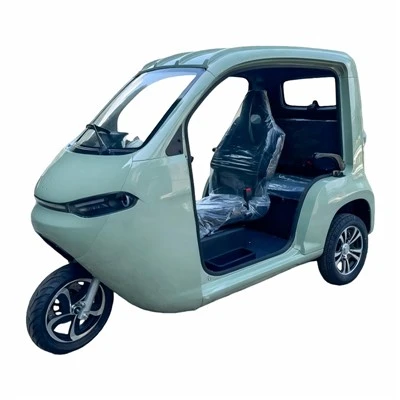
Electric Delivery Tricycle References
- Khan, A. A., et al. (2021). Performance Analysis of Lithium-Iron-Phosphate Batteries for Heavy-Duty Electric Vehicles. Journal of Power Sources.
- Miller, T. J. E. (2019). Permanent Magnet Synchronous Motors for Electric Commercial Vehicles. IEEE Transactions on Industrial Electronics.
- Zhang, Y., et al. (2022). Dynamic Torque Vectoring Control for 4-Wheel-Drive Electric Vehicles on Low-Friction Surfaces. Vehicle System Dynamics.
- Department of Energy. (2020). Regenerative Braking Technologies for Medium- and Heavy-Duty Electric Trucks. DOE Office of Energy Efficiency and Renewable Energy.
Taizhou Xiangyuan New Energy Technology Co., Ltd.
As one of the most professional 4-wheel electric cargo- pickup manufacturers and suppliers in China, we’re featured by quality products and low price. Please rest assured to wholesale cheap 4-wheel electric cargo- pickup made in China here from our factory. Contact us for customized service and pricelist.
Address: NO.7HUANGJIN ROAD,METAL RESOURCES RECYCLING INDUSTRY BASE, LUQIAO, TAIZHOU, ZHEJIANG
E-mail: order@jiajiev.com
WebSite: https://www.jiaji-ev.com/
