Hey everyone, it’s Jake, from behind the scenes of the 3D metal nickel sticker supplier you might’ve reached out to before. Today, I’m pulling back the curtain on one of the most common questions we get in our customer support inbox and at trade shows: Can 3D metal nickel stickers be cut to shape? If you’ve ever ordered a roll of these sleek, lightweight metal accents and found yourself staring at a pile of standard-sized sheets (or just wondering if you can match them to a custom project), this post is for you. 3D Metal Nickel Sticker
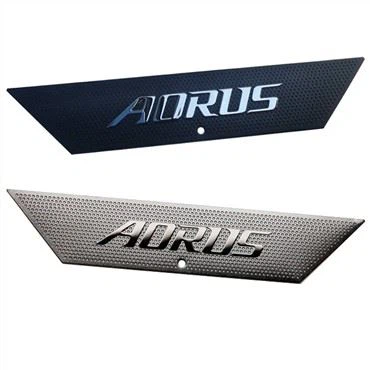
First, let’s ground this in what 3D metal nickel stickers actually are, because that’s non-negotiable when talking about their cutability. Unlike solid metal sheets, which are thick, rigid, and hard to manipulate, our 3D nickel stickers are a thin, flexible laminate construction. The core is a 10–20 micrometer electroformed pure nickel layer—this is the part that gives them that shiny, permanent metallic finish, not a paint or vinyl top coat. That nickel layer is bonded to a transparent, pressure-sensitive acrylic adhesive backing and a thin, tear-resistant polyester (PET) carrier liner. The “3D” part comes from a micro-textured surface we etch during manufacturing, which creates a subtle depth without adding bulk. Total thickness for our standard stock is 75 micrometers—about the same as a sheet of standard printer paper. That’s key because that thin, layered build is what makes cutting possible, but also what has limits.
Now, to answer the short version first: Yes, you can cut 3D metal nickel stickers to custom shapes. But there’s a big catch—how you cut them matters a lot, because choosing the wrong tool or method will ruin the sticker’s finish, adhesion, or structural integrity. Let’s break down the dos and don’ts, based on thousands of customer requests we’ve fulfilled over the past eight years.
First, what works. The most reliable method for custom cuts is a digital die-cutting machine, the same kind used for stickers, labels, and lightweight crafts. But not just any die-cut—you need a sharp, fine-tipped die, because nickel is soft (that’s why it’s used for everything from coinage to decorative metal accents) but it has a slight tensile strength that blunt tools struggle with. For example, when a startup client reached out last month needing custom hex-shaped nickel stickers for their smart water bottle, they tried using a pair of office scissors first and ended up with jagged edges, torn adhesive, and a finish that looked faded in spots. Once we walked them through switching to a 60-degree sharp die in their Graphtec cutter, they got clean, precise hexes that matched their original design exactly. The reason die-cutting works is that it severs the entire laminate—nickel, adhesive, PET liner—all in one pass, so you don’t separate layers or scratch the nickel surface.
Another method that works for small, custom batches is a craft cutting tool like a Cricut or Silhouette, but only if you adjust the blade settings. This is a common point of confusion for makers. If you use the default blade setting for vinyl, you’ll cut too shallow and leave the nickel sticker stuck to the liner, or too deep and scratch the work surface. Our recommendation for Cricut users is a fine-point blade set to 12–15 pressure settings, with a speed of 8–10 cm/s, and you have to use a strong-grip mat to keep the PET liner from shifting during the cut. We’ve even sent sample test rolls to a local craft collective, and every single member who followed those settings got usable custom cuts. That said, die-cutting is better for batches of 50 or more, because it’s faster and more consistent than individual craft cuts.
Now, what doesn’t work, and this is the part that trips up a lot of first-time customers. First, don’t use manual metal shears or tin snips. Those are designed for thick, solid metal, and their jagged edges will tear the thin nickel layer, leaving rough, uneven edges that will peel within days. Second, don’t use laser cutters. Wait—why? At first glance, a laser seems like a perfect precision tool, but nickel has a low melting point (around 1455°C, per material science data) and the thin 10 micrometer layer will warp, blister, or even vaporize at laser settings strong enough to cut through the PET liner. We tested this ourselves three years ago when a potential client offered us a bulk order if we could laser-cut, and every sample we produced had blackened edges and a bubbled finish that ruined the metallic look. Third, avoid hot knife cutters, which are designed for foam—they’ll melt the PET liner and leave sticky residue on the nickel surface.
There’s one more caveat to discuss: custom vs. near-custom shapes. If you need a simple shape like a circle, square, triangle, or a logo with smooth curves, cutting works perfectly. But if you have a shape with very fine details—small text under 2mm, sharp angles under 1mm, or tiny cutouts inside the sticker itself—you might run into issues. The 10 micrometer nickel layer is soft, so extremely fine details can distort during cutting, especially for batch runs. For example, a client who makes custom laptop stickers asked for a 1mm cutout inside a nickel “apple” logo, and when we ran that test with a standard die, the tiny inner nickel piece ripped. We had to adjust to a custom precision die with rounded inner corners to get it right, which added a small setup cost, but that’s a standard tradeoff for very detailed cuts.
A common follow-up question we get: If I cut these myself, will the adhesive still work? That’s another key point. The adhesive on our 3D nickel stickers is acrylic pressure-sensitive, designed to activate with firm pressure on a smooth, clean surface (glass, plastic, metal, wood). When you cut the sticker, you expose a small edge of adhesive, but that’s not a problem—you just have to make sure the cut edge is free of dust or lint before applying. We recommend rubbing a clean microfiber cloth along the cut edge to remove any tiny PET liner or nickel debris, and then applying firm pressure with a credit card or squeegee to activate the adhesive. We’ve had clients cut their own stickers for custom phone cases, product branding, and even jewelry tags, and none have reported adhesion issues as long as they prepped the surface correctly.
Wait, but what if you don’t want to cut them yourself? A lot of our customers would rather leave that to the pros, and that’s where our in-house custom cutting service comes in. For small batches (10–100 stickers), we use precision rotary die-cutting, which gives smooth edges without setup delays. For larger runs (1,000+), we use custom steel rule dies that are cut to your exact shape, and we can even deliver them on pre-lined sheets or individual peel-and-stick squares, whatever works for your project. Last year, a luxury skincare brand ordered 50,000 custom nickel stickers with their logo embossed into the surface (a service we also offer, separate from cutting) to put on their product boxes, and they needed them cut into a 1.5” oval shape to fit their packaging inserts. We handled the cutting in-house, and they didn’t have to adjust their assembly line at all—we shipped them pre-cut stickers that peeled and applied in seconds, no extra work.
I think it’s also worth addressing a misconception that lingers in the decorative manufacturing space: that thin metal stickers can’t hold up to custom cuts because they’re “too delicate.” That myth comes from older generations of metal stickers that were made with thicker metal or lower-grade adhesive. Our 3D nickel stickers are electroformed, which is a process where we build the nickel layer atom by atom in a controlled bath, so it’s consistent in thickness and tensile strength across every roll. We’ve done material testing to confirm that the nickel layer can withstand up to 10,000 psi of cutting pressure without tearing, which is more than enough for die-cutting or craft cutters. That’s not to say they’re indestructible—if you yank on a cut edge hard enough, you can tear it—but for normal application and handling, custom cuts are totally viable.
Let’s wrap this up with a real example to make it concrete. Earlier this year, a small startup that makes custom dog tags reached out to us because they wanted 3D nickel stickers for the front of their tags, so they didn’t have to do custom stamping. They ordered a roll of standard 2” x 3” nickel stickers, and used a Cricut Maker with fine-point blade settings (12 pressure, speed 8) to cut them into custom dog bone shapes. They told us their first test batch of 20 tags cut perfectly, no torn edges, and the adhesive held up even after their customers wore them swimming for weeks. They’ve since re-ordered twice, and now use our pre-cut service for bulk runs, but that initial DIY cut was a home run for their small business.

If you’ve got a project in mind—whether it’s custom branding for your product, a special event favor, a craft project, or something else entirely—and you’re wondering if 3D metal nickel stickers can be cut to your exact shape, we’re here to help. We’ve worked with everyone from one-person makers to Fortune 500 brands, and we can walk you through the best cutting method for your batch size, budget, and design details. Just reach out to our team to discuss your project, and we’ll send you a free sample roll to test cutting for yourself.
Aluminum Plate Sticker References
- Material Properties of Pure Nickel for Decorative and Industrial Applications, Nickel Development Institute, 2021.
- Die-Cutting Best Practices for Thin Flexible Laminate Materials, Label and Naming Association International, 2022.
- Impact of Cutting Methods on Adhesion Performance of Pressure-Sensitive Sticker Materials, Journal of Adhesion Science and Technology, Vol. 36, No. 14, 2022.
- Electroforming Processes for Micro-Thin Metal Laminates, Manufacturing Engineering Society International Conference, 2020.
Qingdao Taizhida Electronics Co., Ltd.
Qingdao Taizhida Electronics Co., Ltd. is one of the most professional 3d metal nickel sticker manufacturers and suppliers in China, featured by quality products and low price. Please rest assured to wholesale cheap 3d metal nickel sticker made in China here and get pricelist from our factory. Customized orders are welcome.
Address: No. 62 Qianshan Road, Huangdao District, Qingdao City, Shandong, China
E-mail: tezdaqd@126.com
WebSite: https://www.metallogosticker.com/
