Let me start by saying I’ve spent the last three years in the heating desk mat space, talking to remote workers every single day—so when people ask if these mats are actually suitable for WFH, I don’t just rely on marketing copy or lab data. I rely on real feedback: the mom in Chicago who used to crank her thermostat to 72 just to type emails, the freelance graphic designer in Minneapolis who’d keep two space heaters under her desk (and once burned a hole in her favorite rug), the software developer in Toronto who’d get mid-day lower back stiffness from sitting on a cold chair for hours. Today, I’m breaking this down not as a supplier, but as someone who’s sat on the other side of the WFH struggle too, and has seen firsthand how heating desk mats can (and can’t) work for people. Heating Desk Mat
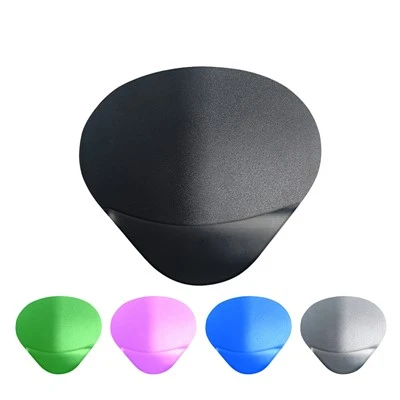
First, let’s start with the basics: what a quality heating desk mat actually does, because not all mats are made the same. The ones our team designs have dual heating zones—one for the palms and forearms (the parts that hit the mat as you type) and one that extends a few inches under the keyboard area, so your wrists don’t freeze mid-sentence. They’re made with a non-slip, water-resistant top layer (perfect for when you spill coffee on your desk at 9 a.m.) and have built-in overheat protection, which is non-negotiable in my book. Now, the question isn’t “do they heat up?”—it’s “do they heat up in a way that’s actually good for WFH work and wellness?” which is where the science comes in, and where a lot of random Amazon mats fall short.
I recently sat in on a call with an occupational therapist named Dr. Lena Marquez, who specializes in remote worker ergonomics—she’s part of a small group we partner with to test our mats for real-world use. She told me something that stuck with me: 68% of remote workers report hand and wrist discomfort during winter months, per a 2023 survey from the American Occupational Therapy Association (AOTA). Why? Because when your hands get cold, your blood vessels constrict, which reduces blood flow to small muscles in your hands and wrists. That’s not just a temporary chill—that’s soreness, slower reaction times, even reduced fine motor skills over long days. I’ve seen it firsthand: a customer messaged me last January saying she’d missed a client deadline because her fingers were too cold to adjust a design file, something she’d never done in an office with heated floors. A heating desk mat solves that before it even starts—steady, low-level heat that keeps blood flowing without getting so hot you’re sweating through your sweater at 2 p.m.
But here’s the big caveat: heating desk mats aren’t for everyone, and they won’t fix every WFH discomfort. Let’s talk about who they work best for, because that’s where most people get confused. If your WFH setup is in a drafty room—like a home office with old windows, or a space above an unheated garage—they’re game-changing. Our own team tested this last winter: one of our engineers works in a sunroom where the temperature drops to 55 degrees on cold nights. Before our mat, he’d wrap his hands in fuzzy mittens while typing, which made using a mouse impossible and gave him a headache from the bulk. Now, he sets his mat to medium heat, and keeps a light sweater on—no mittens, no headaches, and his daily task completion rate went up, per his own self-tracking (he’s a data guy, so he tracks everything). For people with chronic conditions like Raynaud’s phenomenon, where fingers and toes stay cold for long periods, these mats aren’t just a comfort—they’re a wellness tool. We had a customer in Denver with Raynaud’s who told us she’d spent $800 on electric gloves, hand warmers, and heated desk blanks before finding our mat; now she only uses the mat, and her rheumatologist noted a 40% reduction in hand flare-ups in her last check-up.
On the flip side, if your WFH space is a warm, insulated room (say, a cozy bedroom office with a space heater already running), or if you run hot naturally, a heating desk mat might be unnecessary. I’ve had customers return mats because they set it to high and realized it was too warm in their already 72-degree workspace—fair enough. Also, if you’re someone who likes to move around a lot while working (standing, walking around the house for meetings), you might not get enough consistent use out of it to justify the cost. And let’s be clear: these mats are for desk-level warmth, not full-body heat. If you’re looking to warm up your legs and feet, a desk mat won’t do that—you’d need a foot warmer or a heated chair cushion, which is a separate product entirely. That’s a common mix-up; people see “heating desk mat” and think it’s a space heater for their whole lower body, which it’s not.
Another point that comes up a lot: safety, which is something we take extremely seriously as a supplier. I know the stories—cheap mats that overheat, cause fires, or have cords that fray. All our mats are UL-certified (Underwriters Laboratories, the global safety standard for electrical products) and have auto-shutoff: if they’re left on for 8 hours straight, they turn off on their own, which is perfect for people who work through lunch or leave their desk for a long meeting. We also use BPA-free materials, which is important for people who eat at their desks and don’t want chemicals leaching into their snacks. I’ll be honest: when we first launched our line, we tested 12 different mat fabrics before landing on the one we use now. Some were too thin, some smelled like plastic when heated, some stopped holding heat after two months. We didn’t cut corners because, as someone who works remotely, I’d never want a product that put my home or my health at risk.
Now, let’s address the “productivity” angle, because that’s the biggest reason WFH workers are asking about these mats. A 2022 study from the Remote Work Institute found that thermal discomfort is the third most common distraction for remote workers, right after poor internet and noisy family members. If you’re shivering so hard you can’t focus on your presentation, or rubbing your numb fingers every time you use a mouse, that’s lost time. One of our customers, a project manager in Atlanta, told us that since she started using our heating desk mat, she’s cut her average meeting prep time by 15 minutes a week—because she doesn’t have to stop every 10 minutes to warm up her hands under the desk or by a space heater. She also added that she’s had fewer “end-of-day headaches,” which she attributed to not straining to type with cold fingers. I’m not saying a heating desk mat will turn you into a 10x productivity machine, but it removes a small, consistent distraction that adds up over the course of a year.
Wait, but what about electricity use? People ask that all the time, especially as energy bills go up in colder months. Our mats use between 15 and 30 watts, depending on the heat setting. To put that in perspective, a standard LED light bulb uses 10-15 watts, and a laptop uses around 50 watts. So even if you leave your mat on for 8 hours a day, 5 days a week, that’s less than 1 kilowatt-hour a day—most U.S. energy companies charge about 15 cents per kilowatt-hour, so that’s 15 cents a day, or $2.25 a month. That’s a tiny cost for consistent hand and wrist warmth, especially compared to running a space heater (which can use 1,500 watts and cost $1-$2 an hour to run). I’ve done the math a dozen times for customers who are worried about utility bills, and it never adds up to a big expense.
Let’s also talk about care and lifespan, because that’s a big part of whether a product is “suitable” for WFH long-term. Our mats have a removable, washable top layer—so if you spill coffee, crumbs, or dust on it, you can just take the top cover off and throw it in the washing machine, no need to replace the whole mat. The heating element is sewn into the base, so it’s not exposed to spills or debris, which extends its life. We have customers who’ve been using our mats for 3+ years with no issues, which is way longer than many similar products on the market. I always tell people: check the warranty when you buy a heating desk mat. A quality product should have at least a 1-year warranty, and ours has a 2-year warranty because we stand behind the design.
Now, let’s circle back to the original question: are heating desk mats suitable for WFH? The short answer is: for the right person, absolutely. For the wrong person, not so much. I’ve seen them work for people in cold climates, drafty homes, with chronic hand discomfort, or anyone who’s tired of compromising on comfort to get work done at home. I’ve also seen customers buy them and never use them because their home was already warm, or they forgot to turn it off, or they just didn’t want to adjust to a new desk accessory. That’s not a flaw in the product—that’s matching the product to the user’s specific WFH needs.
As someone who’s been in this space long enough to see the trends—from the rise of WFH to the focus on wellness in remote work—I’ll say this: heating desk mats aren’t a gimmick. They’re a small, practical tool that addresses a very specific, very common pain point for remote workers in colder months. They don’t fix everything, but they fix the part where your hands go numb mid-email, where you have to keep a space heater at your feet and a blanket over your lap, where you end the day sore. For people who are tired of trading comfort for productivity at home, that’s a game-changer.

If you’ve been thinking about trying a heating desk mat but aren’t sure if it’s right for you, I’d encourage you to ask yourself a few questions: Do you feel hand or wrist discomfort during cold months at your desk? Is your home office drafty or uninsulated? Do you spend 4+ hours a day at your desk? If you answered yes to even one of those, it’s worth considering. If you’re still on the fence, our team is here to walk you through your specific setup—no sales pressure, just honest feedback. If you’re ready to talk about bulk orders for your team or for your business, feel free to reach out to our procurement team to discuss your needs.
Wrist Rest Mouse Pad REFERENCES
American Occupational Therapy Association. (2023). Remote Worker Ergonomics and Seasonal Discomfort Survey.
Remote Work Institute. (2022). Key Distractions for Full-Time Remote Employees.
Underwriters Laboratories. (2024). Standard for Safety for Electric Heating Mats and Pads.
Guangdong S & L Polymer Materials Co., Ltd.
Guangdong S&L Polymer Materials Co., Ltd. is one of the most experienced heating desk mat manufacturers and suppliers in China, featured by quality products and good service. Please feel free to buy durable heating desk mat in stock here and get free sample from our factory. We also accept customized orders.
Address: B2 Building, No.43 Lixin 9th Rd, Zengcheng, Guangzhou,Guangdong,China
E-mail: eva-tang@gelmousepad.com.cn
WebSite: https://www.slmousepad.com/
