If you’ve ever stared at a pile of mismatched cookware in a kitchen drawer, you’ve probably wondered which pieces justify the countertop space—and stainless steel always seems to come up in the conversation. As a supplier who’s worked with home cooks, professional chefs, and everything in between for over a decade, I get a lot of questions: Is stainless steel cookware actually easy to handle? Or is it a high-maintenance, finicky tool that’s only for people who’ve mastered advanced culinary techniques? Let’s cut through the myths, pull in the real science behind how stainless steel works, and talk about what it’s actually like to use day-to-day. Stainless Steel Cookware
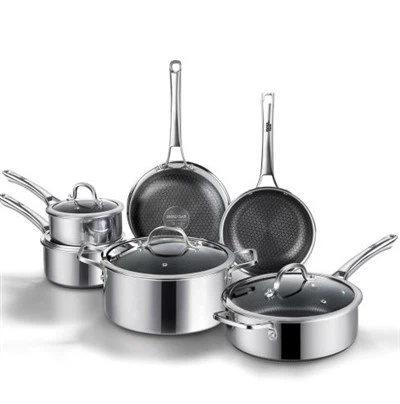
First, let’s clarify what makes stainless steel different from other cookware materials, because that difference is exactly where its reputation for being tricky (or easy) comes from. Unlike non-stick pans, which are coated with polytetrafluoroethylene (PTFE) for low-friction surfaces, stainless steel is an alloy of iron, chromium, and sometimes small amounts of nickel or molybdenum. The 10-20% chromium content is key here: it reacts with oxygen to form a thin, self-healing layer of chromium oxide that prevents rust and corrosion. That’s why it’s durable, dishwasher-safe, and can withstand high heats without warping. But it’s also a poor conductor of heat on its own—pure stainless steel heats unevenly, which is why most quality stainless steel cookware (the kind we supply) has a cladded core: a layer of aluminum or copper sandwiched between two layers of stainless steel. That core distributes heat evenly across the pan’s surface, which solves one of the biggest complaints people have about stainless steel.
Now, let’s get to the handling part—let’s start with the myths. The biggest one I hear all the time is that stainless steel pans automatically stick. That’s not true. Stick happens when you don’t use the right heat level and don’t preheat the pan properly. Here’s the science: when a stainless steel pan is cold, its surface is microscopically rough—tiny peaks and valleys. When you add oil (or butter) and heat the pan, those peaks expand and smooth out as the metal warms. The oil flows into the valleys, creating a non-stick barrier between the food and the pan. If you add food before the pan is preheated enough, the oil never does that, and the food’s moisture seeps into the valleys, causing it to stick. I’ve seen so many new cooks burn pancakes or ruin a sear on a steak and blame the stainless steel, when really they skipped the 2-3 minute preheat step (for stovetops) or turned the heat too high. With practice, preheating becomes second nature, and searing a chicken breast or frying eggs on stainless steel is just as easy as using non-stick—plus, you get that crisp, golden crust that non-stick can’t deliver.
But what about cleaning? That’s another area where people think stainless steel is hard to handle. Let’s be real: if you’re cooking something that’s got a lot of sugars or starches—like a tomato sauce or fried onions—you’ll get browned bits stuck to the pan, called fond. That’s not a flaw; that’s fond, and it’s the base for so many great sauces. People often think they need to scrub like crazy or use harsh chemicals to get it off. But here’s the trick: don’t wash the pan immediately after cooking. Let it cool for 5-10 minutes, then add a little warm water and bring it to a gentle simmer on the stovetop. The heat loosens the fond without scratching the pan’s surface, and it takes just a minute or two to dissolve. For really stubborn bits, a wooden or silicone spatula works (metal utensils are fine too, as long as you don’t use them to scrape aggressively on the bottom—most modern stainless steel is scratch-resistant enough to handle light metal use). Dishwasher safety is another win: our stainless steel cookware is designed to hold up to repeated dishwasher cycles, though we always recommend hand-washing for pieces with wood or silicone handles to extend their life. If you do hand-wash, a little dish soap and a soft sponge is all you need—no special stainless steel cleaners required, unless you’re dealing with water spots, which are just mineral deposits. A quick wipe with white vinegar and a paper towel takes those right off.
Durability is a huge part of ease of handling, too, and stainless steel outlasts almost every other common cookware material. I’ve had customers tell me they’ve used the same set of stainless steel pans for 15 years, compared to non-stick sets that start to peel or lose their non-stick coating in 2-3 years. That means you don’t have to replace them as often, so you’re not dealing with the hassle of picking new sets every few years. It’s also oven-safe, most up to 500°F (260°C), so you can go from stovetop to oven to finish a roast or melt cheese on a casserole. No transferring food to a baking dish, no multiple pieces of cookware to clean— that’s a big time-saver for weeknight dinners or busy meal prep. And unlike cast iron, which needs to be seasoned regularly, stainless steel doesn’t require any special maintenance: just wash it, preheat it, and use it like you would any other pan. That’s a huge plus for people who don’t want to add another chore to their cooking routine.
Wait, but let’s address the times when stainless steel does feel tricky. High heat can cause discoloration—those blue or brown stains that sometimes show up on the pan’s surface. That’s called heat tint, and it’s not rust or damage. It’s just the chromium oxide layer reacting to extremely high temperatures, and it’s completely harmless. It doesn’t affect performance at all, and it can be removed with that same vinegar wipe I mentioned. Some people think discoloration is a sign they’re using the wrong heat, but actually, most modern stovetops get hot enough to cause it, even if you’re following the preheat steps. It’s a cosmetic issue, not a functional one, so it’s not something you need to stress about. Another small downside: stainless steel is heavier than aluminum or non-stick pans, especially larger pieces like Dutch ovens or stock pots. If you have trouble with lifting heavy items, that might feel like a handling issue. But the weight also helps the pan retain heat better, so once you get that preheat right, the heat stays consistent, which is better for cooking. It’s a trade-off, not a flaw, and most people get used to the weight pretty quickly once they see how well the pan performs.
As a supplier, I talk to cooks every day who switch from non-stick to stainless steel and tell me they were surprised how easy it is to get the hang of. A lot of that comes from choosing the right quality cookware, too. Cheap stainless steel pans, which often have a thin, single layer of metal, don’t have that cladded core we talked about, so they heat unevenly and stick more easily. That’s where people get the idea that all stainless steel is hard to handle. But when you choose a quality piece with a thick cladded base, it’s designed to prevent those common issues. We test every batch of our cookware to make sure the core is evenly distributed, the handles are riveted securely (no loose wiggling handles mid-cook), and the edges are rolled so they don’t drip when pouring. Those small design choices make a huge difference in how easy it is to handle.
Let’s wrap this up with a real example, because I think that makes it tangible. Last month, a customer reached out to me saying she’d been avoiding stainless steel for years because her old pan stuck every time she made shrimp scampi. She bought one of our 12-inch stainless steel skillets, followed the preheat step, and sent me a photo later that week of perfectly seared shrimp that didn’t stick at all. She said, “I can’t believe I waited so long to try it.” That’s the reaction we get all the time. It’s not that stainless steel is impossible to handle—it’s that it works differently than non-stick, so you just need to learn a few simple tricks. And those tricks become second nature after a few uses.
So to answer the question: Is stainless steel cookware easy to handle? For most people, absolutely—once you adjust to a few basics, it’s one of the most low-maintenance, versatile cookware options you can have. It’s durable, easy to clean, works for every cooking method from searing to boiling, and saves you time in the long run because you don’t have to replace it often. The small learning curve is nothing compared to the benefits. If you’re curious about trying stainless steel cookware and want to find the right pieces for your kitchen, feel free to connect with us to discuss your needs and find the perfect set for your home.
Wok References:
- Food and Agriculture Organization of the United Nations. (2019). Stainless Steel in Food Contact Applications: Properties and Performance.
- International Stainless Steel Forum. (2021). Stainless Steel Cookware: Safety, Care, and Maintenance Guidelines.
- Journal of Materials Processing Technology. (2020). Heat Distribution Characteristics of Cladded Stainless Steel Cookware.
Zhejiang Nanyue Kitchenware Co., Ltd.
We’re well-known as one of the leading stainless steel cookware manufacturers and suppliers in China, also support customized service. Please feel free to buy high quality stainless steel cookware made in China here and get pricelist from our factory. For price consultation, contact us.
Address: Located inside Zhejiang Jialiyuan Industry and Trade Co., Ltd. (Nanyue Kitchenware) in Jiangbin Industrial Zone, Tongqin Town, Wuyi County, Zhejiang Province.
E-mail: nanyuekitchenware@zj-jlypans.com
WebSite: https://www.nanyuecook.com/
