If you’ve ever stood in a hardware store’s door aisle, staring at stacks of plain, unassuming wooden rectangles and glossy, pre-colored ones, you’ve probably wondered: what’s the real difference between a pre-finished interior slab door and an unfinished one? As a supplier of interior slab doors, I get this question all the time. It’s not just about surface appearance—there are practical, cost, and quality factors that set these two products apart, and choosing the right one can make or break your home renovation, new build, or commercial project. Let’s break it down like I explain it to every customer who walks through my shop or sends an inquiry. Interior Slab Door
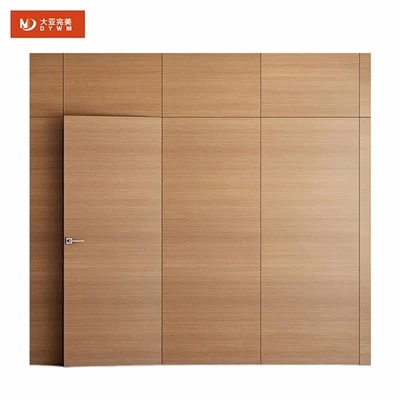
First, let’s define what each of these doors actually is, because that’s where most people start to get confused. An unfinished interior slab door is, at its core, a raw piece of wood (or wood composite, like MDF or particleboard) that’s never been sanded smooth, sealed, stained, or painted. It’s the “blank canvas” version—no layers of finish, no sheen, just the natural (or sometimes plain, brown composite) surface of the material. When you get an unfinished door, it’s your job to do all the finishing work on-site, whether that’s sanding it perfectly smooth, staining it to match your floor, priming it, and painting it to fit your wall color or trim.
A pre-finished interior slab door, on the other hand, leaves all that work to the factory. These doors go through a full finishing process before they ever leave the supplier’s warehouse: they’re sanded multiple times, sealed with a protective base coat, stained to a consistent hue, and top-coated with a durable layer of paint or varnish. The finish is baked or cured in a controlled factory environment, which means it’s uniform, chip-resistant, and ready to hang as soon as the door arrives at your job site. At first glance, that sounds like an easy no-brainer—why do all the work yourself? But there’s a lot more going on under the surface than just whether the door is painted or not.
Let’s start with the biggest practical difference: time and labor. When you’re working on a home renovation or a new build, time is money—and unfinished doors eat up way more of both. Let’s say you’re renovating a three-bedroom home. With pre-finished doors, once the framing, drywall, and flooring are done, you can hang each door and be done with the interior door work in a single afternoon, maybe a full day at most. There’s no waiting for stain or paint to dry, no sanding sticky spots, no touching up drips. I’ve had contractors tell me that switching to pre-finished doors cut their interior installation time by 30% on average for small to mid-sized projects.
Unfinished doors, though, require you to handle all the finishing steps on-site. That means not just painting or staining, but prep work: sanding the door’s edges to a smooth finish, filling any knots or gaps with wood filler, sanding again, wiping off all the dust, then applying coats of stain or paint with a brush or roller. Each coat takes time to dry—usually 24 hours between coats, sometimes longer if the humidity is high. For a three-bedroom home with six doors, that’s at least a week of dedicated labor for the finishing work, plus the cost of supplies like stain, paint, brushes, sandpaper, and primer. For a contractor working on a tight deadline, that’s not just an inconvenience—it can mean missing a project completion date, which leads to penalty fees or unhappy clients.
Quality of finish is another key point, and this is where the factory process for pre-finished doors really shines. When you finish a door yourself, even if you’re a seasoned DIYer, you’re working in an uncontrolled environment. Dust in the air from drywall, uneven lighting that makes drips or missed spots hard to see, temperature and humidity fluctuations that can cause paint to bubble or take too long to cure. My team visits job sites all the time to help customers with door issues, and one of the most common complaints we hear about unfinished doors is that the finished result is inconsistent: one side of the door has a darker stain patch, there’s a noticeable brush stroke across the face, or paint chips off within a few months because it wasn’t cured properly.
Pre-finished doors are finished in a factory with specialized equipment and consistent conditions. The doors are finished in temperature-controlled spray booths, where dust is filtered out to ensure a smooth, blemish-free surface. The coats of finish are applied evenly with professional sprayers, and most high-quality pre-finished doors get 3 to 5 layers of finish (compared to the 1 or 2 coats most DIYers or on-site painters apply) for extra durability. That means the finish on a pre-finished door resists scratches, scuffs, and fading much better than a DIY-finished door. I’ve had customers report pre-finished doors looking like new after 10 years, while their unfinished doors that were finished on-site started showing wear after 3 or 4.
But wait—unfinished doors aren’t obsolete, and they do have their place, especially if you care about custom matching. If you’re trying to match a very specific, one-of-a-kind wood floor, or a custom stain color that’s not a standard shade, an unfinished door lets you tailor the finish exactly to your existing materials. When you finish the door yourself, you can test the stain on a scrap piece of the same wood to get the perfect hue, and adjust it until it matches your trim, cabinets, or flooring exactly. Pre-finished doors come in standard stain and paint colors—while most suppliers offer 10 to 20 popular shades, you won’t find a custom mix for a rare reclaimed wood floor or a unique custom paint color. For high-end, custom homes or historic renovations where every detail has to match perfectly, unfinished doors are often the better choice.
Cost is another factor that’s not as straightforward as it seems. At first, pre-finished doors seem more expensive upfront—usually 15% to 30% more than unfinished doors of the same material. But when you add up the labor and supply costs of finishing an unfinished door on-site, the total cost often evens out or even makes pre-finished doors cheaper. Let’s do a quick example: an unfinished solid wood slab door might cost $150. The stain, primer, paint, brushes, and sandpaper for that door is about $20, and a professional painter will charge around $80 to finish it, for a total of $250. A pre-finished version of the same door costs $200 upfront. So even with the higher initial price, you’re saving $50 per door, not to mention the time the painter could spend on other parts of the project. For commercial projects with 50+ doors, that adds up to thousands of dollars in savings.
There are also material considerations. If you’re using a solid wood door, unfinished doors give you the option to choose the exact grain pattern and wood quality, since you can inspect the door in person before you buy. Pre-finished doors are finished before they ship, so you have to rely on photos to pick the grain. For composite doors, though, MDF and particleboard are not meant to be refinished after installation—they can warp or delaminate if you sand or paint them on-site, so pre-finished composite doors are the only viable option for those materials. That’s a key point I always make sure to mention to customers: never buy an unfinished composite door, because it won’t hold up to on-site finishing.
Durability is another point worth diving deeper into. Pre-finished doors have a hard, cured surface that’s resistant to moisture, which makes them a better choice for high-traffic areas, like front doors, laundry room doors, or bathroom doors. The factory-applied finish is sealed tight, so moisture can’t seep into the door and cause warping, even in humid environments. Unfinished doors, on the other hand, require careful sealing after finishing to protect them from moisture. If you forget to seal the edges or apply a thin coat, the door can absorb moisture from humidity or spills, leading to swelling, warping, or even mold growth. For areas like bathrooms or kitchens, pre-finished doors are definitely more practical.
But there’s a flip side to that durability. If you ever need to repair a pre-finished door, it’s a lot harder than repairing an unfinished one. If a pre-finished door gets a scratch, you can’t just touch it up with a can of paint—you have to sand down the entire area, match the exact finish and color (which can be tricky if it’s a custom factory shade), and re-apply the top coat. Unfinished doors, though, are easy to touch up: you just sand the scratch, apply a little more stain or paint, and you’re done. For rental properties or commercial spaces where doors might get damaged frequently, that ease of repair makes unfinished doors a more convenient choice long-term.
I’ve seen both doors work perfectly for different projects, and the best choice always comes down to what the customer’s priorities are. If you’re on a tight timeline, want a low-labor, durable door that’s ready to hang right away, and you’re okay with a standard color that fits most common home styles, pre-finished is the way to go. If you need a custom color to match unique materials, want more control over the exact look of the door, or are working on a small project where you have the time to do the finishing work, unfinished doors will give you the flexibility you need.
That said, there are a few common mistakes I see customers make when choosing between these two options. The biggest one is assuming that pre-finished doors are always higher quality. While that’s true in most cases, some cheap pre-finished doors use a thin, flimsy finish that chips easily. The key is to work with a reputable supplier who uses multi-coat, cured finishes for their pre-finished doors. For unfinished doors, the mistake is buying a solid wood door and trying to rush the finishing process—cutting down on drying time, not sanding properly, or applying too many thin coats will result in a poor-looking, short-lasting door.

At the end of the day, whether you’re a homeowner doing a renovation, a contractor working on a new build, or a designer putting together a commercial space, choosing between pre-finished and unfinished interior slab doors doesn’t have to be overwhelming. It all boils down to your timeline, budget, color needs, and how much work you want to put in on-site. If you’re still not sure which is right for your project, don’t hesitate to reach out and connect with our team to discuss your specific needs and get guidance on the best doors for your space. We’re here to help you make the right choice for your project, no matter how big or small.
Interior Slab Door References
- National Wood Window and Door Association. (2021). Interior Door Finishing: Factory vs. On-Site. NWWDA Technical Bulletin.
- American Wood Council. (2022). Solid Wood Door Durability and Maintenance. AWC Construction Guide.
- Door and Access Systems Manufacturers Association. (2023). Pre-Finished vs. Unfinished Door Cost-Benefit Analysis. DASM Industry Report.
- Jozsa, L. A., & Nichols, J. W. (2020). Wood Finishing Basics for Builders and Remodelers. Forest Products Journal.
One May Dee Show Furniture Co., Ltd.
As one of the most professional interior slab door manufacturers and suppliers in China, we are committed to providing high quality customized service with competitive price. Welcome to wholesale bulk cheap interior slab door made in China here from our factory. If you have any enquiry about quotation, please feel free to email us.
Address: Laomiao Village, Dacheng Town, Sanyuan County, Xianyang City, Shaanxi Province, China.
E-mail: trade@omdoor.com
WebSite: https://www.dywmdoor.com/
