If you’ve ever walked through a manufacturing plant, a metal fabrication shop, or even a packaging facility, you’ve likely heard the low, steady rumble of a screw air compressor running in the background. For my team and me, that sound is part of our daily routine—we’re a screw air compressor supplier, and every day we work with business owners who are standing at a crossroads: fixed-speed or variable-speed screw air compressor. It’s not a choice we take lightly, because the right decision doesn’t just impact monthly utility bills; it affects uptime, maintenance costs, and even the longevity of the entire compressor. Over the years, I’ve sat across from shop managers who swear by the simplicity of fixed-speed models, and plant engineers who won’t consider anything less than variable-speed technology. Today, I want to break this down like I do for every customer who calls us, no sales pitch, just real, on-the-ground facts that tie directly to what your operation actually needs. Screw Air Compressor
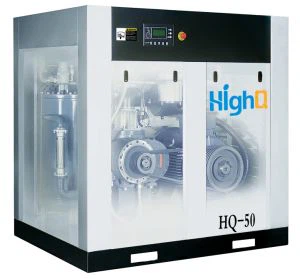
First, let’s start with the basics, because a lot of people use terms like “fixed-speed” and “variable-speed” without really understanding how they work. A fixed-speed screw air compressor runs at a consistent, maximum RPM at all times. When your operation’s air demand is low—say, one half of your production line is shut down for a shift—it still pumps air at full capacity, and that excess air has to go somewhere. Most fixed-speed models have an unloader valve that kicks in: instead of compressing new air, it just recirculates the air already inside the pump, which wastes energy. A variable-speed screw air compressor, on the other hand, uses an inverter (or VFD, variable frequency drive) that adjusts the motor’s RPM to match exactly how much air you need in real time. If demand drops, the motor slows down; if you need more air for a new job, it speeds back up. That difference might sound small at first, but when you’re running the compressor 10+ hours a day, five days a week, it adds up fast.
Let’s talk about energy usage, because that’s the biggest line item for most operators. I recently had a customer from a small auto parts shop come to us, saying their monthly compressor bill was $1,200, and they thought that was just the cost of doing business. When we installed a variable-speed compressor for them six months later, their bill dropped to $720. That’s a 40% reduction, no hidden fees, no changes to how they ran their shop. Why? Because fixed-speed compressors are only efficient when they’re running at 100% capacity. If your demand fluctuates even by 20%, you’re wasting energy. For example, if a bakery uses compressed air to operate mixers, packaging lines, and conveyor belts, on days when they’re baking a full order of bread, demand is high—fixed-speed works fine. But on days when they’re only running half shifts, they’re pumping 50% more air than they need, and the unloader valve is just burning electricity to run the motor without doing any useful work.
Variable-speed models eliminate that waste, but that doesn’t mean they’re always the better choice. Let’s say a customer runs a small woodworking shop that only uses compressed air for nail guns and a single dust collection line, and they only run their compressor 4 hours a day, five days a week. The upfront cost of a variable-speed unit is 20-30% higher than a comparable fixed-speed model. In that case, the energy savings might never pay back the extra investment—we’re talking about a payback period of 7-10 years, which is longer than most small businesses keep their core equipment. For a customer like that, fixed-speed is the smarter call. It’s simple: less moving parts (no inverter to maintain), lower upfront cost, and since they’re only running at full capacity when they use it, waste is minimal.
Next, let’s talk about uptime and reliability, because downtime in a manufacturing setting can cost thousands of dollars an hour. Fixed-speed compressors have been around for decades—they’re the workhorse of the industry. There’s very little to go wrong with them: a motor, a pump, and a basic control system. For operations with consistent, predictable air demand, like a factory that runs the exact same production line 24/7, fixed-speed models are super reliable. They don’t have the complex electronic components that variable-speed units do, so there’s less chance of a breakdown from a faulty drive or sensor. That said, fixed-speed compressors do have a part that wears out faster: the unloader valve. When it cycles on and off constantly, it can develop leaks or fail over time, which leads to wasted air and more maintenance.
Variable-speed compressors, while they have more electronic parts, have fewer of those unloader valve cycles. Because they adjust smoothly, they don’t have that sudden on-off stress on mechanical parts. For operations that have fluctuating demand, that means less wear and tear on the overall system. I had a customer from a metal stamping plant that would run three shifts, but night shifts only used 60% of their air demand. Before switching to variable-speed, their fixed-speed compressor’s unloader valve was cycling 80 times an hour, and they were replacing it every 6 months. After installing the variable-speed unit 3 years ago, that valve hasn’t needed a single replacement—even with the same 24/7 operation. The other thing to note here is that modern variable-speed compressors have made leaps in reliability in the last 5 years. The inverters we use now are built to handle harsh industrial environments, with sealed enclosures and temperature controls, so they’re not the fragile tech they used to be. It’s still something to consider, but it’s less of a risk than it used to be.
Maintenance costs are another big factor. Let’s break this down. Fixed-speed compressors have straightforward maintenance: oil changes, filter replacements, and occasional unloader valve or belt adjustments. It’s work that most in-house maintenance teams can handle, or that your local service tech can do at a lower hourly rate. Variable-speed compressors add one extra task: annual inverter tune-ups, which are a little more specialized, so they might cost a bit more. But remember, that less frequent unloader valve cycling cuts down on other maintenance. For the metal stamping plant I mentioned earlier, their annual maintenance cost dropped by about 15% after switching, because they weren’t replacing the unloader valve every six months and wasting compressed air on leaks from a worn valve.
But here’s a key point: maintenance costs also tie to how you run the compressor. If you’re a customer with inconsistent demand, the extra maintenance for variable-speed is a small price to pay for the energy savings. If you have consistent demand, fixed-speed’s lower upkeep might win out. We always do a free, no-obligation audit for every customer that calls us, where we look at their air demand logs, how many hours they run the compressor, and their monthly utility bills, to give them a clear picture of what their maintenance costs will be over 5, 10, and 15 years. That’s the part most suppliers skip, but it’s the part that makes all the difference.
Now, let’s talk about common myths, because I hear these every single week. The first is: “Variable-speed is always better for the environment.” Well, yes and no. If your operation has fluctuating demand, the lower energy use means a smaller carbon footprint—no question. But if you’re a small operation with consistent, low demand, a variable-speed compressor that runs at partial capacity for short periods might not be much more efficient than a well-maintained fixed-speed model. Also, the production of variable-speed compressors uses more materials for the inverter and control system, so there’s a small upfront environmental cost. It’s not a black-and-white call.
Another myth: “Fixed-speed compressors are cheaper long-term.” That’s only true if your demand is consistent. For example, a customer that runs a bottle filling plant 24/7, 365 days a year, with air demand that never varies by more than 5%. A fixed-speed compressor would work perfectly here—they’re efficient at full load, low upfront cost, low maintenance over time. But if that same plant expanded their line, adding a packaging station that uses 40% more air during daytime shifts, the fixed-speed model would now be wasting energy every night when the packaging line is shut down. That’s when variable-speed starts to make sense.
So, putting this all together, how do you choose? Let’s make a quick checklist, the same one we use with every customer:
First, calculate your average and peak air demand. If your demand fluctuates by more than 20% over a typical week or month, variable-speed is almost always worth considering. If it stays within 10% of your compressor’s capacity, fixed-speed is probably a better bet.
Second, add up your monthly operational hours. If you run the compressor less than 1,000 hours a year, the energy savings from variable-speed will take too long to cover the extra upfront cost. If you run it 2,000+ hours a year, the payback period is usually 2-4 years, which is a no-brainer.
Third, think about future growth. If you’re planning to expand your operation, add new production lines, or take on larger orders in the next 3-5 years, a variable-speed compressor gives you flexibility. You can adjust to higher demand without buying an entirely new unit, while a fixed-speed unit would require a larger model, adding more upfront cost.
I’ll be honest with you—we sell both fixed-speed and variable-speed screw air compressors. We don’t push one over the other, because our business depends on long-term customers who trust that we’re giving them the right advice, not just a sale. Last month, we had a customer come back to us who bought a fixed-speed unit from us 3 years ago. He’d expanded his production line, and his air demand was now 35% higher during shifts. We swapped out his fixed-speed compressor for a variable-speed model, and he told us his energy bill went up by $0—because the new compressor adjusted to match the extra demand without wasting power. That’s the kind of solution we care about.
At the end of the day, choosing between fixed-speed and variable-speed screw air compressors isn’t about which is “better” overall—it’s about which is better for your specific operation. It’s not a decision to make based on a blog post or a sales flyer; it’s based on your own numbers, your own workflow, and your own long-term goals.

If you’re tired of paying too much for your compressor’s energy, worried about unexpected maintenance costs, or just not sure if your current setup is the right fit, we’re here to help. We don’t pressure customers into quick decisions. We do a full audit, walk you through the numbers, and give you a clear picture of what each option will do for your business. Reach out to our team to schedule a consultation, and let’s talk through what works for you.
Compressor Parts References:
- Compressed Air Challenge Best Practice Guidelines for Screw Air Compressors, 2022
- U.S. Department of Energy, Industrial Compressed Air System Optimization Handbook, 2021
- Gardner Denver Industrial Equipment Reliability Report, 2023
- International Compressed Air and Gas Institute (CAGI), Variable Speed Drive Compressor Performance Standards, 2022
- Plant Engineering Magazine, “Choosing the Right Compressor for Fluctuating Demand,” 2023
Xiamen HighQ Compressor Co., Ltd.
With over 20 years’ experience, Xiamen HighQ Compressor Co., Ltd. is one of the most professional screw air compressor manufacturers and suppliers in China. We warmly welcome you to buy high quality screw air compressor made in China from our factory. Good service and punctual delivery are available.
Address: 7th F. No.704 Yi Hua Center Xiamen China 361100
E-mail: vincent@hqcompressor.com
WebSite: https://www.hqcompressor.com/
