If you’ve ever watched a steel barrel roll off a production line, you know they’re not just plain metal containers—they’re workhorses for transporting everything from industrial chemicals and food-grade oils to construction materials and waste products. As someone who’s been supplying steel barrels for over a decade, I’ve seen firsthand how even the smallest mistake in truck transport can turn a routine delivery into a costly headache. Last year, a customer in the manufacturing sector lost $12,000 worth of coatings when 15 barrels rolled mid-transit, denting their sides and leaking contents. That incident drove home how critical proper transport protocols are—especially when every barrel you ship has to arrive intact, compliant, and ready to use. Steel Barrel
This post isn’t just a list of rules; it’s the hard-earned knowledge I’ve picked up while loading, securing, and delivering steel barrels on trucks, tailored to suppliers who need to balance speed with safety and cost.
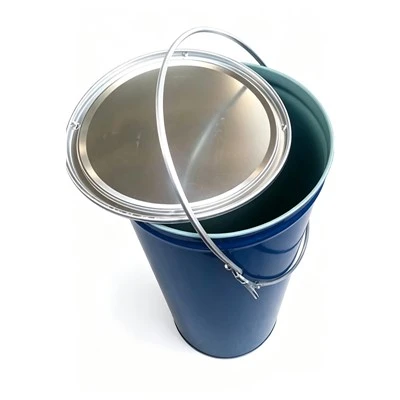
First, you have to account for the two main types of steel barrels, because they’re not built the same, and that changes how you load them. Open-head barrels (with a removable top, used for thick liquids, powders, or hazardous materials) have reinforced rims around the top and bottom, but their sides are thinner, making them prone to bending if stacked improperly. Closed-head barrels (sealed all around, for non-hazardous liquids like motor oil or vegetable oil) have a stronger, uniform structure, so you can stack them higher. I learned this the hard way early on: I once stacked three open-head barrels on top of two, only to find the bottom layer’s sides buckled before we even reached the highway. Now I always specify to my team: never stack more than two open-head barrels high on a flatbed truck, and up to four for closed-head barrels. That’s a baseline, but you still have to adjust for your truck’s weight capacity.
Truck type is the next big decision. For local deliveries (under 50 miles), I use a standard box truck with a roll-up rear door—it’s easy to load with a forklift, and the closed sides keep barrels from blowing off during windy days, which is a common issue on rural routes. For long-haul cross-country runs, I prefer a flatbed with a tarp system, because box trucks have a tighter weight limit (often around 10,000 lbs for cargo) and I can fit 20% more barrels on a flatbed without overloading. If you’re moving hazardous material barrels (marked with UN numbers), you have to use a DOT-approved enclosed cargo van or a flatbed with side rails—open flatbeds aren’t allowed for hazardous goods in most states, and I’ve had drivers get pulled over for that, leading to delayed deliveries and fines.
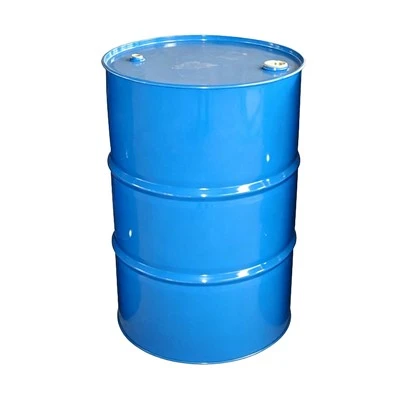
Loading order and arrangement matter more than you think. I start with the heaviest barrels first—usually 55-gallon drums filled with industrial chemicals, which weigh around 500 lbs each. Place them along the truck’s floor edges, against the side walls or wheel wells, because those areas have the most structural support. Never put heavy barrels in the middle of the load, because they’ll shift and crush lighter barrels underneath. For stacked barrels, make sure the top layer’s rim sits directly on the bottom layer’s rim, not on the side of the barrel below. If you skip that, the weight concentrates on a small area, bending the lower barrel’s side and creating a leak risk. I also space barrels 1 to 2 inches apart along the length of the truck to let air circulate—this prevents condensation, which can cause rust on the barrel’s exterior, and it gives straps room to tighten without pinching metal.
Securing barrels is where most suppliers cut corners, and it’s the part that prevents roll-offs and damage. I’ve tested every type of strap and restraint over the years, and the best system combines two layers: horizontal straps around the load’s height, and vertical or edge restraints along the sides. For flatbed loads, I use 2-inch wide nylon cam buckles—they’re cheaper than ratchet straps and just as strong for stationary loads, which is what most barrel deliveries are. Never use rope or bungee cords; I’ve seen both snap on the highway, sending barrels bouncing into other lanes. If you’re stacking barrels, run a strap around the top layer twice—once around the entire stack, and once crisscrossing from front to back. For edge protection, I add heavy-duty rubber mats between the straps and the barrels to prevent the strap from cutting into the metal when you tighten it. Last year, a customer sent me a photo of a barrel that arrived with a 2-inch cut from a poorly placed strap—we ended up replacing it for free, so now I insist my loading team uses those mats no matter how rushed the job is.
Weather and route conditions are non-negotiable factors. If you’re delivering in rainy or snowy weather, you can’t just toss a random tarp over the load—use a heavy-duty, UV-stabilized tarp that’s secured with extra straps. I always check the forecast for the route: if there’s a chance of heavy rain, I seal each barrel’s bungs (the top and bottom plugs) an extra turn to prevent water from getting inside, which can ruin the contents or cause the barrel to rust from the inside out. For hilly or mountainous routes, reduce the maximum load height by one layer—going up a steep grade, the truck’s front end lifts slightly, and high stacks can shift forward. I once had a load of 120 closed-head barrels slide forward 2 feet on a mountain pass, denting 20 of them; since then, I cap stacks at three layers for routes with steep inclines. For windy coastal areas, add two extra vertical straps along the sides to keep barrels from being blown sideways—wind gusts over 30 mph can easily push a single barrel off a flatbed, especially if it’s empty or partially filled.
Hazardous materials add an extra layer of regulations you can’t ignore. If your barrels are classified as UN 1A1, 1A2, or 1G (the standard for steel hazardous barrels), you have to follow DOT’s Hazardous Materials Regulations (HMR) to the letter. That means labeling each barrel with the correct hazard class number, having a shipping paper that lists the contents, and using a driver who’s certified to transport hazardous materials. I work with drivers who’ve passed the HAZMAT training, and I never send a load of hazardous barrels without a copy of the shipping paperwork stored in a waterproof folder in the cab. One time, a new driver on our team forgot to include the paperwork for a load of chemical barrels—we got stopped at a state inspection, and the load was held for 8 hours, costing the customer a day of production. Now I have a checklist for every hazardous shipment, and the driver signs off on it before leaving.
Post-delivery, there’s a quick check you should do to make sure your transport protocol is working. I follow up with customers within 24 hours of delivery to ask if any barrels arrived damaged. If there’s damage, I’ll track back through the load notes: did we stack too high? Were the straps tight enough? Did we skip the edge mats? Most small dents are avoidable with better loading, but leaks usually point to a bung that wasn’t sealed properly. This feedback loop has helped me tweak my process over the years—now we add a small rubber washer to every bung before loading, which cuts leak incidents by 90%.
At the end of the day, transporting steel barrels isn’t just about getting them from point A to point B—it’s about protecting the value of a product that’s built to last. As a supplier, my reputation depends on every barrel arriving in the same condition it left the warehouse, and I’ve learned that cutting corners on loading, securing, or route planning always costs more in the long run.
If you’re in need of reliable steel barrels for your operation, whether for industrial use, chemical transport, or storage, I can provide quantities tailored to your needs and ensure they’re shipped safely and on time. Reach out to discuss your requirements, and I’ll walk you through the best options for transport that fit your budget and timeline.
Steel Barrel References
- U.S. Department of Transportation. Hazardous Materials Regulations: Steel Barrel Transport Standards.
- American Iron and Steel Institute. Guidelines for Steel Container Handling and Transport.
- National Institute for Occupational Safety and Health. Safe Loading Practices for Industrial Freight.
- Truckload Carrier Association. Flatbed Cargo Securement Best Practices for Barrel Shipments.
Anhui Lining Packaging Container Co., Ltd.
We are one of the most professional steel barrel manufacturers and suppliers in China, also support customized service. Please rest assured to wholesale bulk high quality steel barrel in stock here from our factory. If you have any enquiry about quotation, please feel free to email us.
Address: Maodikou Village, Dangshan County, Anhui Province
E-mail: In13905677285@126.com
WebSite: https://www.liningpack.com/
