If you’ve ever held a medical device part so small it fits on the tip of your finger, or used a smartphone camera lens that focuses sharper than a hawk’s eye, you’ve probably benefited from micro-machining work—and if that work turned out right, there’s a good chance quartz abrasive media played a role. Let’s cut to the chase: as a quartz abrasive media supplier, I get asked all the time why our material beats out the rest for tiny, high-precision parts. Most people don’t realize micro-machining isn’t just about cutting something small—it’s about leaving it perfect, no scratches, no burrs, no weird texture that would ruin how it works. Let’s break down exactly where quartz shows up in that world, and why it matters more than you might think. Quartz Abrasive Media
First off, let’s get the basics straight. I’m talking about micro-machining here, which is any process where you work on parts with dimensions smaller than 1 millimeter, usually way smaller—think 10 to 500 micrometers. A human hair is about 70 micrometers thick, so we’re dealing with stuff tinier than that. You can’t use a big, heavy abrasive for these jobs; it has to be consistent, hard enough to do the work, but not so harsh it breaks the part you’re making. Quartz abrasive media is basically super-purified silica (SiO₂) crushed into uniform granules, heat-treated to make it extra tough, and sized down to match whatever micro-job you’re tackling. It’s way more consistent than, say, aluminum oxide or silicon carbide abrasives, which can have variable particle sizes that mess up tiny parts. That consistency is non-negotiable in micro-machining—one off-size particle can scratch a $1,000 medical component.
Let’s start with the industries that need this the most, because that’s where quartz shines. The big one is medical device manufacturing. If you’ve had a pacemaker, a joint replacement, or even a blood test done, you’re interacting with parts made via micro-machining. For example, pacemaker leads are tiny, flexible wires that carry electrical signals to your heart. After they’re cut to size, they have sharp burrs left over from the machining process—those burrs can fray, break loose, and cause serious problems inside someone’s body. You can’t use a big abrasive to buff those burrs; it would damage the thin, sensitive insulation on the lead. That’s where quartz abrasive media comes in. We have 30-micron quartz granules that tumble with the pacemaker leads for a few hours, gently knocking off the burrs without scratching the insulation or the metal core. It’s not just pacemakers, either: surgical tools like tiny forceps or scalpel blades get micro-machined edges, and those edges need to be smooth so they don’t tear tissue. Too rough, and a cut heals wrong; too smooth, and the blade doesn’t slice right. Quartz’s hardness (about 7 on the Mohs scale) is perfect here—it’s hard enough to refine the edge, but soft enough not to over-polish. I’ve had clients in the med device space tell us they cut their burr-removal time by 40% when they switched to our quartz media, because it’s more consistent than the aluminum oxide they were using before. No more guessing whether a particle is too big or too small—every granule is the same, so the process works every time.
Next up, electronics. Let’s be real, your phone, laptop, and smartwatch are all full of micro-machined parts. The most important one here is semiconductors, but also the tiny components that go into circuit boards, like connectors and capacitors. Semiconductor wafers are sliced from silicon ingots, and after they’re patterned with transistors, there are tiny leftover material bits (called residue) on the surface that ruin the next steps. You can’t use a chemical cleaner here—they can etch the delicate transistor patterns. Quartz abrasive media is used in a process called micro-abrasive blasting to strip that residue off without damaging the transistors. The key here is that quartz is chemically inert; it won’t react with the silicon or the metals used in semiconductors. That’s a huge deal—some cheaper abrasives can leave metallic contamination, which ruins a whole wafer. Our quartz media is 99.9% pure silica, so there’s no contamination. I also work with a lot of electronics clients who make micro-connectors for wearables. Those connectors have pins that are only 50 micrometers thick—if you scratch one, it won’t fit into the port right. Quartz media is used to deburr and polish those pins, giving them a smooth, consistent surface that makes connection reliable. One client told us that since switching to our quartz media, their connector failure rate dropped from 2% to less than 0.1%—that’s a game-changer for a market where 1 billion devices get made every year.
Another area that people don’t talk about as much is aerospace and defense. Drones, satellite components, and even tiny guidance systems for missiles all use micro-machined parts. Those parts have to work in extreme conditions—cold, vacuum, vibration. If a part has a rough surface, it can wear out faster, or catch on other parts and cause a failure in mid-flight. Quartz abrasive media is used to finish tiny turbine blades for small drones’ engines, and also to polish the internal parts of gyroscopes that keep satellites pointed the right way. The advantage here is that quartz has a low coefficient of thermal expansion—meaning it doesn’t change size much when it gets hot or cold. Other abrasives, like glass beads, expand more, so when you’re working on a precision part that has to fit perfectly in a wide temperature range, that expansion can throw off tolerances. Quartz doesn’t do that, so the finished part stays the exact size it’s supposed to be, no matter the environment. That’s why a lot of defense contractors swear by quartz for their high-stakes micro-parts.
Wait, let’s not forget about what makes quartz different from other abrasives in micro-machining specifically. A lot of people ask me, “Why not just use silicon carbide? It’s harder, right?” Yeah, silicon carbide is harder (about 9.5 Mohs), but it’s also sharper and more brittle. For micro-parts, you don’t want a sharp abrasive—it can dig into the part, especially soft metals like titanium or stainless steel that are common in med devices. Quartz is angular, but it’s less sharp than silicon carbide, so it removes material evenly without digging in. And because it’s heat-treated, it doesn’t break apart easily during the tumbling or blasting process. If an abrasive breaks, you get little fragments that can cause scratches—we test our quartz media to make sure less than 5% of it breaks during use, which is way lower than most competitors. Also, quartz is non-toxic, which is a big plus for med device and electronics work. No harsh chemicals, no heavy metals, so it’s safe to use in closed processes that don’t need extra contamination control.
Now, let’s talk about a common mistake I see a lot of new clients make. They think “bigger abrasive = faster polishing,” but for micro-machining, that’s the opposite. If you use a 100-micron abrasive on a 50-micron part, you’re going to leave a permanent scratch. We work with each client to size the quartz media exactly to their part’s dimensions. For example, if you’re deburring a 200-micron screw, we’d use 50-micron quartz granules—small enough to get into the screw’s threads and remove burrs, but big enough to do the work without damaging the screw’s surface. That’s the service we provide as a supplier, not just selling bulk media. A lot of suppliers just sell a one-size-fits-all quartz, but micro-machining needs customization, and that’s where we stand out.
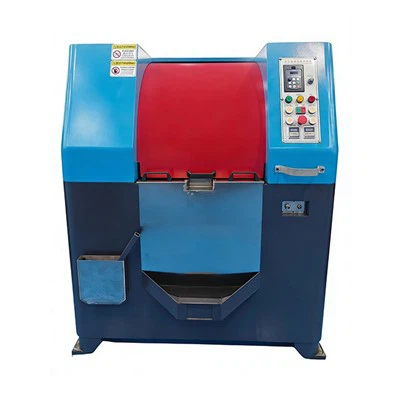
Also, the process itself matters. Quartz abrasive media is used in two main micro-machining processes: barrel tumbling and micro-abrasive blasting. Barrel tumbling is when parts and media are in a rotating barrel, tumbling against each other to finish the surfaces. It’s great for batches of small parts—like hundreds of pacemaker leads at once. Micro-abrasive blasting is when you shoot the media at the part with compressed air, for more precise, localized work—like cleaning residue off a specific section of a semiconductor wafer without touching the rest. Quartz works for both, because it’s consistent and hard enough for blasting, and durable enough for tumbling. I’ve had clients use our quartz media for both processes, which simplifies their supply chain—they only have to work with one supplier for both steps, which saves time and money.
Let me give a real example to make this concrete. Last year, a client who makes insulin pumps reached out to us. They were having a problem with their insulin pump’s flow sensors—tiny, 300-micron metal discs that regulate how much insulin gets delivered. The sensors had been scratching during tumbling with glass beads, which was causing inconsistent insulin doses, and they were getting 15% reject rates. We recommended switching to our 40-micron heat-treated quartz media, and adjusted the tumbling time from 2 hours to 1.5 hours. Within a month, their reject rate dropped to less than 1%, and their production output went up 20% because they didn’t have to throw away as many parts. That’s the kind of impact quartz has—no more wasted parts, no more rework, and a better product for the end user.
Now, I should be honest and say quartz isn’t the right choice for every micro-machining job. If you’re working on very soft plastics, for example, quartz might be too hard and scratch the plastic. Or if you need a super-mirrored finish, you might use a finer abrasive, but quartz still works better than most for middle finishes. But for 70% of micro-machining jobs that involve metals, ceramics, and silicon, quartz is the go-to. It’s cost-effective too—since it’s durable, it lasts longer than other abrasives, so you don’t have to replace it as often. That cuts down on material costs for clients, which is a big deal when you’re making millions of parts a year.
At the end of the day, micro-machining is all about precision. One tiny flaw can ruin a part, and for industries like medicine or aerospace, that flaw can ruin a life or a piece of expensive equipment. Quartz abrasive media is one of those unsung heroes that makes those parts perfect. It’s consistent, inert, the right hardness, and customizable to whatever micro-job you’re working on. If you’re in the micro-machining industry, whether you’re making med devices, electronics, or aerospace parts, you probably know how important your abrasives are. If you’re dealing with scratches, burrs, contamination, or reject rates that are too high, it might be time to switch to quartz abrasive media. We can work with you to test a sample, size the media exactly for your parts, and show you how much time and money you can save. Don’t settle for less than perfect for your micro-parts—reach out to us to connect about your needs.
Drag Polishing Machine References:
- Kalpakjian, S., & Schmid, S. R. (2020). Manufacturing Processes for Engineering Materials (7th ed.). Pearson Education.
- ASM International. (2018). Metals Handbook: Volume 14: Forming and Forging (11th ed.). ASM International.
- Tonshoff, H. K., et al. (2002). Micro-machining of metals, ceramics and polymers. CIRP Annals, 51(2), 495-518.
- Dillon, O. W., et al. (2006). Micro-abrasive finishing of ceramic materials. Journal of Manufacturing Processes, 8(1), 1-10.
- International Organization for Standardization. (2019). ISO 14644-1: Cleanrooms and associated controlled environments — Part 1: Classification of air cleanliness by particle concentration. ISO.
Dongguan Xindingsheng Intelligent Grinding Technology Co., Ltd.
Dongguan Xindingsheng Intelligent Grinding Technology Co., Ltd. is one of the most reliable quartz abrasive media manufacturers and suppliers in China, also supports customized service. Please feel free to wholesale bulk high quality quartz abrasive media in stock here from our factory. Contact us for pricelist.
Address: Room 101, Building 1, No. 73 Dahuangmei Road, Dalingshan Town, Dongguan City, Guangdong Province, China
E-mail: cndskj@126.com
WebSite: https://www.xdsfinishing.com/
