If you’ve ever tackled a DIY project, fixed a wobbly shelf, or installed a new bike handlebar, you’ve probably dealt with hex nuts. They’re those six-sided metal fasteners that pair with bolts to hold everything together, right? And let’s be real—most of us have been in a pinch: you loosen a nut to adjust something, then stare at it thinking, “Can I just reuse this, or do I need to grab a new one from the hardware store?” As someone who’s supplied hex nuts for years (we’re not gonna drop a fancy company name, but let’s just say we’ve shipped these little guys to everyone from backyard mechanics to aerospace techs), this question comes up all the time. It’s not a yes or no answer—there’s a lot that goes into whether a hex nut can make a second round. Hex Nuts
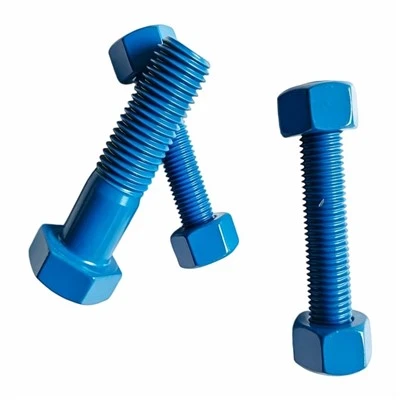
First, let’s break down what makes a hex nut work in the first place. The whole point is the threads, right? When you tighten a nut onto a bolt, the threads grip each other, creating tension that holds whatever’s connected tight. If you loosen and tighten a nut again, those threads have to hold the same tension without wearing out. But not all hex nuts are the same. Let’s start with the basics: material. We sell nuts in stainless steel, zinc-plated steel, and brass, and each behaves totally different when reused. Stainless steel, for example, is way harder than zinc-plated, so it can handle more tighten-and-loosen cycles. Zinc plating is a thin layer, though—if you’re working in a wet, corrosive spot, that plating can chip off when you remove the nut, leaving the steel underneath vulnerable to rust. Brass is softer, so it’s great for things like bikes or woodworking, but it wears out faster if you’re taking it on and off a lot.
Next up: thread condition. This is the big one. When you remove a nut, how did you do it? Did you use a wrench that fit perfectly, so the nut turned smoothly without getting stuck? Or did you fumble with a wrench that was a little too big, stripping the edges of the hex? Or did the nut get corroded on, so you had to hit it with a hammer or use a PB blaster to loosen it? That last one is a problem. If a nut is seized to a bolt, forcing it loose can damage the internal threads of the nut, or even the external threads of the bolt. Even if you can twist it off, those threads might have tiny burrs or scratches that mean it won’t grip as tight the second time. I’ve seen guys reuse a nut that came off a rusty bolt, only to have that nut slip off a week later when they tightened a lawnmower blade—total nightmare. So if the threads look scratched, deformed, or have gunk (rust, dirt, old grease) caked in them, skip reusing it. Clean the bolt and the nut, but if the damage is already there, it’s not safe.
Then there’s torque and tension. When you install a new hex nut, you torque it to a specific value—like, for a 1/4-inch stainless nut, that’s usually around 8 foot-pounds. Tension is what keeps everything from moving. If you reuse a nut, can you get that same tension again? It depends. If you’re only reusing a nut once, and the threads are still in good shape, you might get close. But if you’re talking about multiple reuses? That’s where things get risky. Every time you tighten a nut, the threads stretch a tiny bit (that’s normal, it’s how tension builds). Once you loosen it, those threads don’t bounce back perfectly. They’re a little worn, so when you retighten, the tension is lower. For things like a bookshelf, that’s probably fine. For something that’s under load—like a car’s suspension, a bike’s crankset, or a scaffolding bolt? That’s a different story. Too low tension, and parts can shift, wear out faster, or even fail. I had a customer a few years back who reused nuts on his trailer’s wheel bolts, and after a long trip, a wheel came loose. Thank god he wasn’t on the highway, but that’s exactly why we tell people to be careful.
Wait, what about lock nuts? Those are the ones with a nylon insert, right? A lot of people use these for things that vibrate a lot, like motorcycle parts. Can you reuse a lock nut? Short answer: no, not usually. The nylon insert is meant to create friction to keep the nut from loosening. When you loosen the nut, that nylon gets squished out of shape. It might feel okay to retighten, but the friction is gone—so it can spin loose on its own. I’ve seen people try it, and 9 times out of 10, it fails. The nylon insert is a consumable part, so you should always replace a lock nut if you take it off.
Now, let’s talk about exceptions. Are there times when reusing a hex nut is totally safe? Yeah, if it’s a low-stress application, you removed it cleanly, and the threads look good. Let’s say you’re adjusting a table leg, take the nut off to move it, put it back on. That’s not gonna cause any problems. Or if you’re working on a small woodworking project, you take a nut off to drill a hole, put it back. Again, totally fine. But even then, double-check the threads. If there’s any rust, dirt, or wear, give the nut a quick clean with a wire brush, and if it looks okay, go for it. But don’t cut corners here—we’ve seen way too many people try to save a buck or two and end up with a mess.
Another thing: galvanic corrosion. If you’re using a nut made of a different metal than the bolt, like a zinc-plated steel nut on a stainless bolt, when you tighten it, the two metals react. If you remove and reuse that nut, the reaction is going to make the threads stickier, which can damage the nut’s threads. So if you’re using dissimilar metals, reuse is probably not a great idea. Stick to matching materials, and that’s one less thing to worry about.
Let me also mention what we tell our customers when they ask this question. We don’t just say “yes” or “no”—we break it down. First, assess the nut: check the hex edges. If they’re stripped (you can fit a pair of pliers and twist the nut, not the wrench), that nut is done. Next, look at the threads. Run your finger over them—if they feel smooth, no burrs, no rust, that’s good. If they feel rough, or you can see scratches, toss it. Then, think about the application. Is this holding something that’s gonna be under a lot of force, or just something that’s for show and not moving much? For high-stress stuff, always use a new nut. For low-stress, clean and check, reuse if it looks good.
I’ve been in this industry long enough to know that hex nuts are tiny, but they’re one of the most critical parts of any build. They might look like just a little metal hex, but they hold together everything from your kid’s bike to wind turbines. So cutting corners on a nut isn’t worth it. That said, if you’ve got a nut that’s been removed in good shape, there’s no harm in reusing it. Just don’t risk it on something that could be dangerous.
At the end of the day, if you’re not sure, or if you need new hex nuts for any project—whether it’s a small DIY around the house or a big industrial job—we’ve got you covered. We supply all kinds of hex nuts, from standard zinc-plated to stainless steel and brass, in every size you could need. Just reach out to our team to chat about what you’re working on, and we’ll help you pick the right nut for the job. No sales pitch, no pressure—just honest advice, since we’ve been in the fastener game long enough to know what works.
Stud Bolts References
- Machinery’s Handbook, 31st Edition, Industrial Press Inc.
- Fastener Technology International, “Reusability of Threaded Fasteners,” 2022.
- ASTM F593, Standard Specification for Stainless Steel Bolts, Screws, Nuts, and Threaded Rod.
- Parker, D., “Thread Wear and Fastener Reuse,” Journal of Fastener Technology, 2019.
Handan Jihao Fastener Co., Ltd.
We’re known as one of the most professional hex nuts manufacturers and suppliers in China. With abundant experience, we warmly welcome you to wholesale customized hex nuts made in China here from our factory. If you have any enquiry about cooperation, please feel free to email us.
Address: A2, Row 31, Feiyu Screw World, Hebei Pu, Linmengguan Town, Yongnian District, Handan City, Hebei Province
E-mail: wenzhaona0@gmail.com
WebSite: https://www.chinaboltnut.com/
