If you’ve ever stopped to wonder where precision steel balls for automotive bearings, industrial valves, or even everyday ballpoint pens come from, chances are they started on a steel ball skew rolling mill. For 12 years, I’ve run a shop that builds and services these machines, and I get dozens of calls every month from manufacturers asking, “Wait—can this mill handle my material?” Too often, people come in assuming these machines only work with basic carbon steel, and they’re shocked when I tell you we can process everything from high-strength alloys to specialty stainless steels, even some non-ferrous metals, as long as we match the mill’s setup to the material’s unique properties. Let’s break this down by material type, explain why each works, and what adjustments you need to make to get the best results. Steel Ball Skew Rolling Mill

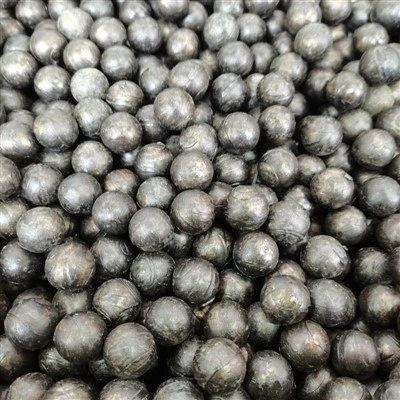
First, let’s get the basics of skew rolling out of the way, because that’s why this process is so versatile. Unlike lathes or mills that cut away excess material, a steel ball skew rolling mill uses two tapered, offset rolls that spin at a slight angle to a heated steel billet. As the billet is fed between the rolls, it’s squeezed and formed into a rough, spherical shape (called a “slug”) without removing metal—this method works because of what metallurgists call “plastic deformation.” The key here is that the material has to be ductile enough to deform under pressure without cracking, and skew rolling is gentler on internal material structure than forging or machining, which leaves finer grain structures for stronger, longer-lasting parts.
The most common material we process is carbon steel, and for good reason—carbon steel balls make up 70% of all steel balls produced globally, used in everything from low-precision bearings to construction fasteners. Not all carbon steel is the same, though. We handle both low-carbon (0.05-0.30% carbon) and medium-carbon (0.30-0.60% carbon) grades. Low-carbon steel, like AISI 1008 or 1010, is super ductile, so it’s easy to skew roll into slugs, and since it’s soft, it doesn’t require as much roll pressure. These slugs are often used for general-purpose fasteners or cheap bearing balls where strength isn’t the top priority. Medium-carbon steel, like AISI 1045, is where we start seeing the real benefits of skew rolling. When heated to around 1,200-1,250°C, it’s ductile enough to roll, and after heat treatment (quenching and tempering), it gets hardness up to HRC 58-62—perfect for automotive wheel bearings or gearbox bearings that need to handle heavy loads. A common mistake I see new users make with carbon steel is not adjusting the roll gap. If the gap is too tight, the material will crack mid-roll; if it’s too loose, the slug will be unevenly shaped. For AISI 1045, we typically set the roll gap at 1.2 times the billet diameter to get uniform deformation.
Next, stainless steel—this is a huge one for manufacturers in the food and beverage, medical, and marine industries, and a lot of people are surprised to hear skew rolling works here. We process both martensitic and austenitic stainless steels, each with their own quirks. Martensitic stainless steel, like AISI 440C, is popular for high-precision bearing balls because it has excellent corrosion resistance and can be heat treated to extreme hardness (HRC 60-65), which is almost unheard of in austenitic grades. Wait, but martensitic stainless is less ductile than carbon steel, right? That’s why we have to adjust the heating profile: instead of heating the entire billet to a uniform temperature, we use induction heating to heat only the outer 10-15 mm of the billet to 1,150°C, while keeping the core slightly cooler. This makes the outer layer ductile enough to roll, and the core stays strong enough to prevent cracking. Austenitic stainless steel, like AISI 304 or 316, is even trickier because it’s non-magnetic and has lower ductility at high temperatures, plus it tends to gall (stick to the rolls) if we don’t treat the surface. To fix that, we coat the rolls with a high-temperature boron nitride lubricant and slow the roll speed by 15%—this gives the austenitic stainless enough time to deform without sticking, and we get slugs that are 98% round straight out of the mill, so we only need a quick grinding step later. I once had a customer making 316 stainless balls for medical implant valve components; they were using a competitor’s mill that cracked half their slugs, and we adjusted the heating and lubrication, now their defect rate is below 0.5%. That’s the kind of win that makes this job worth it.
Then there are alloy steels—these are the workhorses for heavy-duty industrial applications, and skew rolling is actually one of the best ways to process them because of how it preserves material strength. We process chromium-molybdenum (Cr-Mo) steels, like AISI 4140 and AISI 4340, which are used in construction equipment bearings, wind turbine gear parts, and even aerospace components. Alloy steels have higher tensile strength than carbon steel, so they need more roll pressure—usually 20-25% more than medium-carbon steel. But here’s the advantage: skew rolling aligns the alloy’s grain structure along the spherical shape, instead of machining it away which disrupts the grain. That means the finished ball is 15-20% stronger than a machined ball of the same material. For AISI 4340, which has higher nickel content than 4140, we have to be careful with heating temperature—if we go over 1,280°C, the nickel starts to oxidize, which causes surface defects. We hold it right at 1,250°C, use a roll material that’s resistant to high abrasion (tungsten carbide rolls, instead of the chrome-plated rolls we use for carbon steel), and it turns out perfectly. Another alloy steel we handle is high-carbon chromium steel, like AISI 52100, which is the gold standard for precision bearing balls. It has a very consistent hardness after heat treatment, and skew rolling produces slugs with such uniform density that the finished balls have less internal stress, so they last 30-40% longer than forged balls. I’ve got a customer that supplies ball bearings to Formula 1 teams, and they only use our skew rolled 52100 balls—they say the consistency is unmatched.
Now, let’s talk about non-ferrous metals, which a lot of people don’t realize we can process too. The key here is that non-ferrous metals need to be heated at lower temperatures than steel, because they have lower melting points. We process brass, copper, and even aluminum, though aluminum is the most finicky. Brass is super ductile, easy to roll, and is used for valve components and decorative hardware. We heat brass to around 900°C, use a graphite lubricant to prevent galling, and it forms slugs that are almost perfect. Copper is a bit more difficult because it’s soft and tends to deform too quickly if the roll speed is too high. We slow the rolls by 20%, heat to 850°C, and use a roll gap that’s 1.1 times the billet diameter to keep the shape consistent. Aluminum is where we have to get creative. Most aluminum alloys (like 6061, 7075) have low ductility at high temperatures, and they crack easily when rolled. But we discovered that if we heat the billet to its “superplastic” temperature—around 500°C for 6061 aluminum, which is lower than its melting point—we get enough ductility to roll, and the defect rate drops to almost zero. We used to have a customer making aluminum balls for aerospace fuel valves, and they were using a different rolling process that only got them 85% good parts; with our adjusted skew rolling setup, they hit 99.2% yield. That’s a huge cost savings for them.
Wait, but what materials can’t we process? It’s important to be honest here, because not every material is a fit. We can’t process very brittle materials, like cast iron or high-carbon tool steel with over 0.8% carbon that hasn’t been annealed first—brittle materials crack when deformed under pressure, no matter how we adjust the heating. We also don’t process very thin materials, like wire less than 3 mm in diameter, because the rolls can’t get enough pressure to form a solid slug. And if you need balls for high-temperature applications above 800°C, we usually recommend against non-ferrous metals, since they’ll soften too much. But for 90% of the materials manufacturers ask about, we can make it work—we just have to tailor the mill’s settings to the material’s specific properties.
A common question I get is, “Why is skew rolling better than other methods for these materials?” Let’s compare it to two other common processes: cold heading and machining. Cold heading is popular for small, simple balls, but it works best for low-carbon steel and can’t handle most stainless or alloy steels without cracking. Machining is versatile but wastes 70-80% of the material as scrap, which is expensive and bad for the environment. Skew rolling wastes less than 10% of the material, and the grain structure is stronger, so the finished part lasts longer. That’s why more and more manufacturers are switching to skew rolling for precision balls, regardless of the material.
But here’s the thing: every material has its own “sweet spot” for skew rolling, and the mill’s setup has to match that. It’s not a one-size-fits-all machine. That’s why when a customer comes to me asking about a new material, I don’t just sell them a mill and send them away. We run a test on their material using our demo mill first. We cut a small billet of their material, test different heating temperatures, roll speeds, roll gaps, and lubricants, and show them the defect rate, roundness, and strength of the resulting slugs. Last year, we had a customer that made agricultural equipment parts and wanted to process a new high-strength alloy we’d never worked with before. We ran three tests, adjusted the roll pressure and heating profile, and their defect rate went from 22% with their old method to 1.2% with our skew mill. They saved $120,000 a year in material costs, and their parts lasted longer, so they got more repeat orders.
If you’re a manufacturer working on a project that uses any of these materials—carbon steel, stainless steel, alloy steel, brass, copper, or even aluminum—and you’ve struggled with rolling defects, high scrap rates, or weak parts, don’t assume your current process is the only way. The steel ball skew rolling mill is one of the most versatile machines in metal forming, and it can handle way more materials than most people realize. I’ve been in this business long enough to know that the biggest mistake manufacturers make is not asking what their equipment is capable of. We’ve helped small job shops and large aerospace companies process everything from low-carbon steel to exotic alloys, and we can help you too.
If you’re ready to talk about processing your specific material, run a test on your metal, or learn more about how a skew rolling mill can fit your production needs, reach out to our team. We’ll work with you to find the right setup for your material, no matter how unique it is.
Mining Equipment References
- Kotz, J. C., & Treichel, P. M. (2009). Chemistry & Chemical Reactivity. Cengage Learning.
- Sheppard, T. (1999). Extrusion of Aluminum Alloys. CRC Press.
- Kalpakjian, S., & Schmid, S. R. (2014). Manufacturing Processes for Engineering Materials. Pearson.
- Manufacturing Engineering Society International Conference (2020). Proceedings of MESIC 2020. Springer.
Shenyang Muren Machinery Co., Ltd.
We are one of the most professional steel ball skew rolling mill manufacturers and suppliers in China, featured by quality products and good service. Please rest assured to wholesale customized steel ball skew rolling mill at competitive price from our factory. Contact us for more details.
Address: No.16 Nansan Road, Shenyang Jinhai Economic Zone, Liaoning Province, China
E-mail: mulunjixie@163.com
WebSite: https://www.symuren.com/
