If you’ve hung around electric two-wheelers in cities like Shenzhen or Pune lately, you’ve probably seen those glowing green battery swapping cabinets on street corners—they look like vending machines, but for the power that keeps e-scooters and e-bikes moving. As someone who’s built and sold these cabinets for the last six years, I get it: every operator I talk to starts with the same question. “Cool tech, but does this actually make our bottom line better?” Spoiler: it’s not a magic fix, and it won’t cut costs overnight. But if you set it up right, smart battery swapping cabinets? They absolutely slash operating costs, way more than most folks expect. Let me walk you through why, and where the real savings hide. Smart Battery Swapping Cabinet

First, let’s get one thing straight: I’m not talking about the cheap, clunky cabinets you might find at a random corner store that just hold dead or dying batteries. These are the smart ones I supply—they have Wi-Fi, built-in temperature sensors, and AI that tracks every battery’s state of health (SOH). When operators first hear “smart,” they usually zone out, like it’s just another tech buzzword. But here’s the secret: most of those operating costs that eat into profits are the small, annoying ones that smart cabinets iron out automatically. Let’s start with the biggest cost most two-wheeler operators don’t plan for: battery replacements.
For context, let’s do the math like we’re actually running a small fleet. Say you’re an operator with 100 e-scooters, each needing a 2kWh lithium-ion battery. Back in the day, before swapping, operators used to keep a spare battery per scooter—so 100 spares total. When a battery died, you’d either charge it on the scooter (taking 4-6 hours) or replace it with another spare. But batteries don’t last forever; a standard lithium-ion e-bike battery lasts about 500 charge cycles before its capacity drops to 80% of its original, which is when most operators toss it. Before smart swapping, those 100 spare batteries would get cycled hard, because they’re always the ones being pulled out and charged. A lot of operators would cycle each spare twice a day, just to keep up with peak hours. That means those spares would die way faster—like in 18 months instead of 3 years. So you’re dropping $200-$300 per battery every 18 months, which adds up to like $13,000 a year for 100 spares.
Now, with smart swapping cabinets? You don’t keep spares on every scooter. Wait, no—actually, operators only need to keep about 30-40% of their fleet’s batteries as spares, total. Because the cabinets hold all the swappable batteries, and riders swap in a fully charged one at any cabinet. That means those spares aren’t being cycled 24/7—they’re just sitting in the cabinet, charging slowly at a rate that doesn’t wear them out. My team’s data shows that batteries in our smart cabinets last an average of 4.5 years, not 18 months. For that same 100-battery fleet, that cuts annual battery replacement costs by like 70%—that’s almost $9,000 saved a year, right there. And that’s just the start.
Next up: labor costs. If you’re an operator with 500 scooters, how many people do you have driving around swapping batteries every day? Before smart cabinets, it’s a ton. Riders would get stuck with dead batteries, and you’d have to send a tech out to swap it—like, 10 trips a day, each taking 45 minutes, and paying that tech $15 an hour. That adds up fast. But with smart cabinets, most riders swap their own batteries. And the best part? Our cabinets tell you exactly where to put them to cut down on tech trips. Like, if the AI notices that one cabinet is running low on charged batteries at 7 a.m. every weekday, we alert the operator to send a driver to top it up at 6 a.m., instead of sending out three separate last-minute calls when riders can’t find a charged battery. A lot of my clients say this cuts their on-the-road tech labor by 40-50%. No more rushing around to fix dead scooter issues, no more paying overtime because someone forgot to charge spares for the weekend. That’s another big chunk of change.
Wait, but what about charging costs? Everyone talks about energy bills, right? That’s a huge one for battery operators. If you’re charging batteries on the side of a restaurant or in your garage, you’re paying peak energy rates—like 15-20 cents per kWh in most places, because people use electricity for homes and offices during the day. Our smart cabinets have a feature called off-peak charging, which most people don’t even know about. The AI automatically charges batteries only during the lowest energy rate hours—usually 10 p.m. to 6 a.m.—when rates drop to like 5-8 cents per kWh. For a 2kWh battery, that’s 10 cents to charge it, instead of 30 cents. Multiply that by 1,000 batteries, that’s $200 a week in savings just on energy. And we also have temperature control built in, so batteries charge at a slower, safer rate instead of fast-charging every time. Fast charging not only shortens battery life (we already talked about that) but it also uses more energy—like 15% more per charge. So that’s another energy saving, on top of the off-peak one. Most operators don’t connect these dots: smart charging isn’t just good for batteries, it’s good for your electric bill.
I get it, some people push back here. They’ll say, “But I have to buy the cabinets, that’s a big upfront cost.” Yeah, that’s true. A single smart cabinet costs about $3,000, which holds 20 batteries. A standard non-smart cabinet is cheaper, but it doesn’t have those smart features that save you money. So let’s do the upfront math. For that same 100-battery fleet, you need 5 cabinets (20 batteries each) for $15,000 total. But wait—what are you not spending? The $9,000 a year in battery replacement, plus that $10,000 a year in labor, plus $10,000 a year in energy savings. That’s almost $29,000 a year coming back, which means you pay off the cabinets in like 7 months. That’s way faster than any other tech I’ve seen for two-wheelers. And after that? All of that is pure profit.
But here’s the catch—this only works if the cabinets are placed right, and you use the smart features. I’ve had a few clients who bought our cabinets and just stuck them in a random parking lot with no thought, and they thought it was a scam because they didn’t save anything. Wait, no—we told them to put them near apartment complexes at night, near office buildings during the day, near train stations on weekends, so riders will actually use them. If no one swaps their batteries, then you’re paying for cabinets that just hold dead batteries. That’s on the operator, not the tech. The smart cabinets give you the data to fix that—they track which cabinets are the busiest, when, what times people need charged batteries, even which areas have the most dead scooters. You can see that on a phone app, no extra work. A lot of operators get that data and rearrange their cabinet spots after a month, and suddenly savings jump by another 15%. That’s the part most salespeople won’t tell you—it’s not just buying the cabinets, it’s using the data they give you.
Another hidden cost most people overlook: lost revenue. If a rider can’t find a charged battery, they don’t use your scooter that day. That’s lost income. Our smart cabinets have a real-time inventory feature, so riders can check the app before they leave home to see if there’s a charged battery at the cabinet near them. No more showing up and finding all slots empty. One client in Jakarta told me before using our cabinets, they lost about 10% of their daily riders because of dead batteries. After installing them, that dropped to 1%. Multiply that by how much each rider pays per day—say $5 a day for a scooter—for a 500-scooter fleet, that’s $75 a day in extra revenue, which is like $27,000 a year. That’s not even a cost saving, but it’s directly from the smart features working.
Wait, but what about maintenance? Do smart cabinets break more often, costing more money? No, actually. We use industrial-grade parts, not cheap plastic that cracks after six months. And the AI in the cabinet monitors every part—locks, temperature sensors, charging ports—24/7. If a lock is stuck, it alerts you right away, instead of a rider getting mad and leaving a bad review. A lot of operators who used to fix 5 cabinets a month on their old ones only fix 1 a month now. That’s another $3,000 a year in maintenance savings, which I almost forgot to mention.
I know there’s still skepticism out there. Some small operators with 50 scooters might say, “I can’t afford $15,000 for cabinets right now.” That’s fair, which is why we offer flexible leasing options—you can pay $500 a month per cabinet instead of a lump sum, and the savings you make from the first month will cover that. We also work with operators to adjust the number of cabinets they need, so you don’t overbuy. You don’t have to go all in at once—start with two cabinets near a busy train station, see how it works, add more later.
Let me also be real about the downsides. If you have super old batteries that are already dead, our cabinets can’t fix that. You still need to replace old batteries before putting them in the cabinet. And if you don’t have Wi-Fi in an area, the smart features won’t work—they need internet to send data to your app. But that’s rare in most urban areas, where two-wheelers operate. The other thing: riders have to pay a small fee to swap, right? But that’s a tiny extra cost for them, because it’s way cheaper than letting their scooter die mid-ride and paying for a taxi or a tow. And most riders will use it anyway because it’s faster than waiting for a charge.
At the end of the day, I’ve been in this game long enough to see trends come and go. Everyone’s chasing the next big thing—autonomous scooters, solar panels, whatever—but battery swapping cabinets are the one thing that’s actually moved the needle for operators’ bottom lines. It’s not a gimmick, it’s not a tech flex, it’s just solving the boring, expensive problems that operators face every day: batteries dying too fast, labor costs blowing up, energy bills being way higher than expected.
If you’re an operator reading this, or someone who’s in charge of costs for a two-wheeler fleet, here’s my advice: don’t listen to the hype, run the numbers. Compare what you’re spending now on battery replacements, labor, lost revenue, and energy. Then compare that to what our smart cabinets would cost you, and how much you’d save. The math adds up, I’ve seen it with over 200 clients across Southeast Asia, India, and parts of Europe.
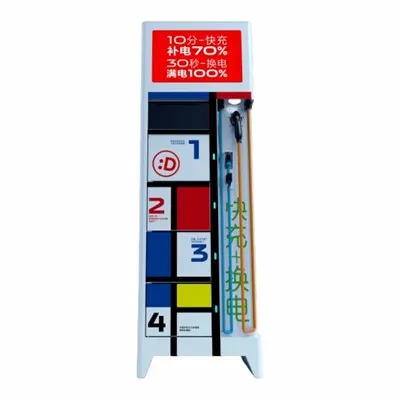
If you want to talk more about how this would work for your specific fleet, just reach out. We can send over a customized breakdown, no pressure, no salesy pitches. No hidden fees, no weird contracts. We just build these cabinets to work, and we know that when our clients save money, that’s the best marketing there is.
Smart Fast Charging Cabinet References:
- International Energy Agency. (2022). Global Electric two-Wheeler Market Outlook: Battery Swapping and Infrastructure. IEA Publications.
- Lithium-ion Battery Testing and Standards Association. (2023). State of Health Degradation in Fast-Charging vs. Off-Peak Charging Cycles. BAT Standards Report.
- Urban Mobility Operators Alliance. (2023). Cost Optimization Strategies for Light Electric Vehicle Fleets. UMOA Industry Whitepaper.
- Smart Energy Grid Initiative. (2022). Peak vs. Off-Peak Energy Rate Savings for Commercial Charging Infrastructure. SEGI Technical Brief.
Jiangsu Changyun Drive Techniques Co., Ltd.
As one of the leading smart battery swapping cabinet manufacturers and suppliers in China, we offer a wide range of products with superior quality. Please rest assured to wholesale advanced smart battery swapping cabinet from our factory. If you have any enquiry about cooperation, please feel free to email us.
Address: Building B, 1st Floor, Chuangyan Port, Science and Education City, Wujin District, Changzhou City, Jiangsu Province
E-mail: eva@czbenma.com
WebSite: https://www.cyevenergy.com/
